Alfred Gallery, Tel-Aviv
September 11–October 11, 2025
Curator: Ori Drumer
Exhibition video and installation views: Daniel Hanoch
Artwork photography (studio): Dadi Elias
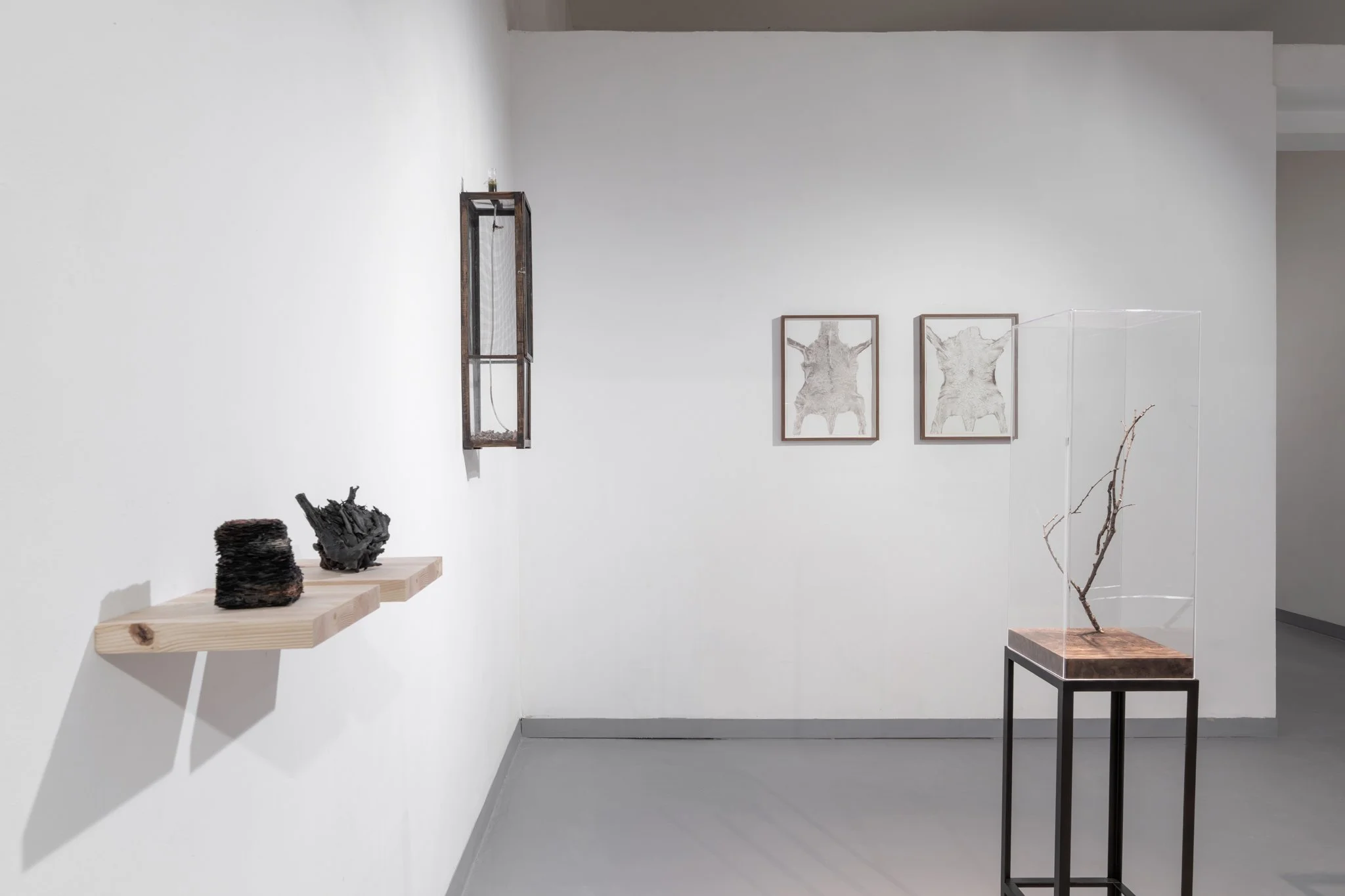
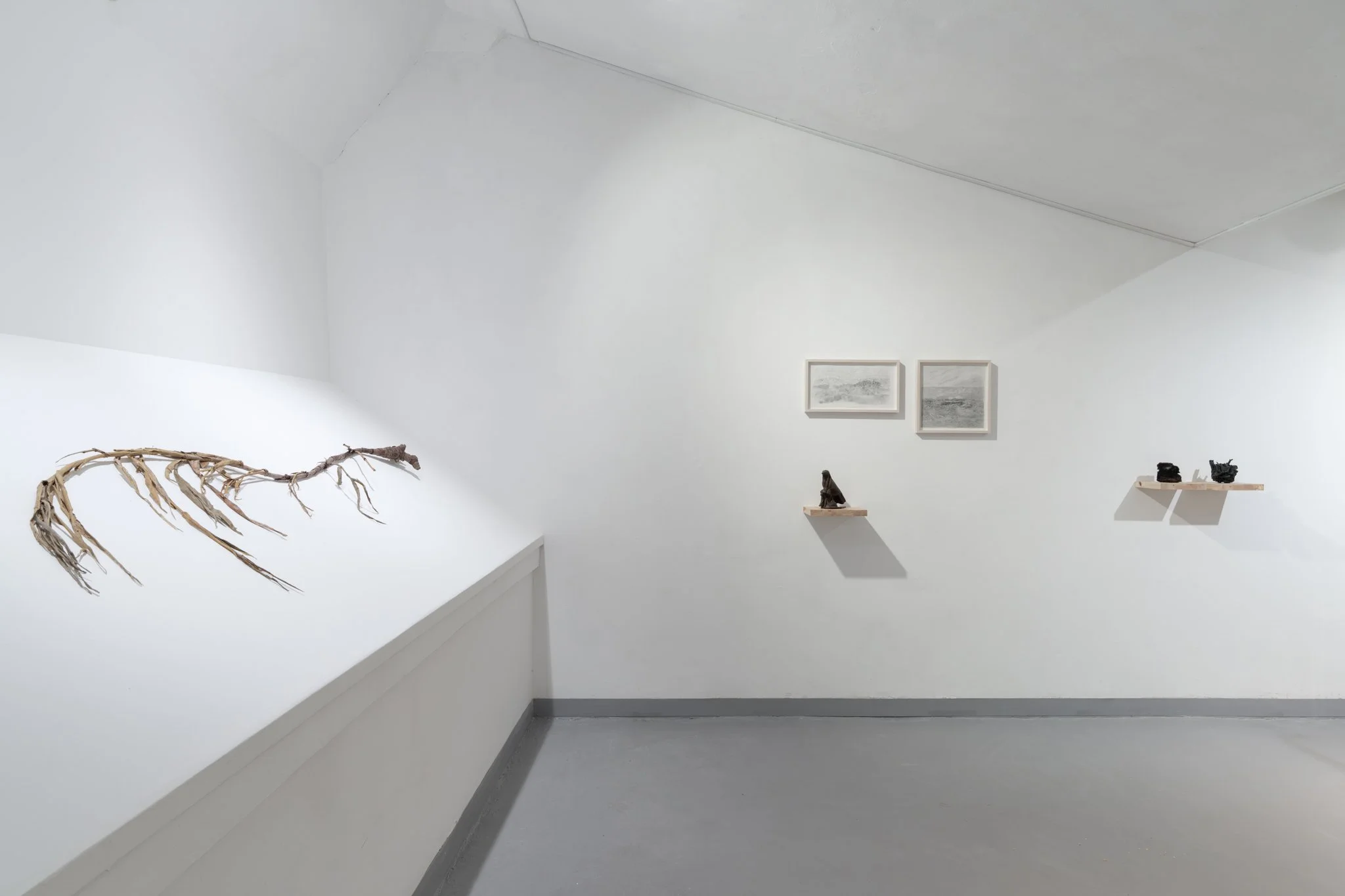
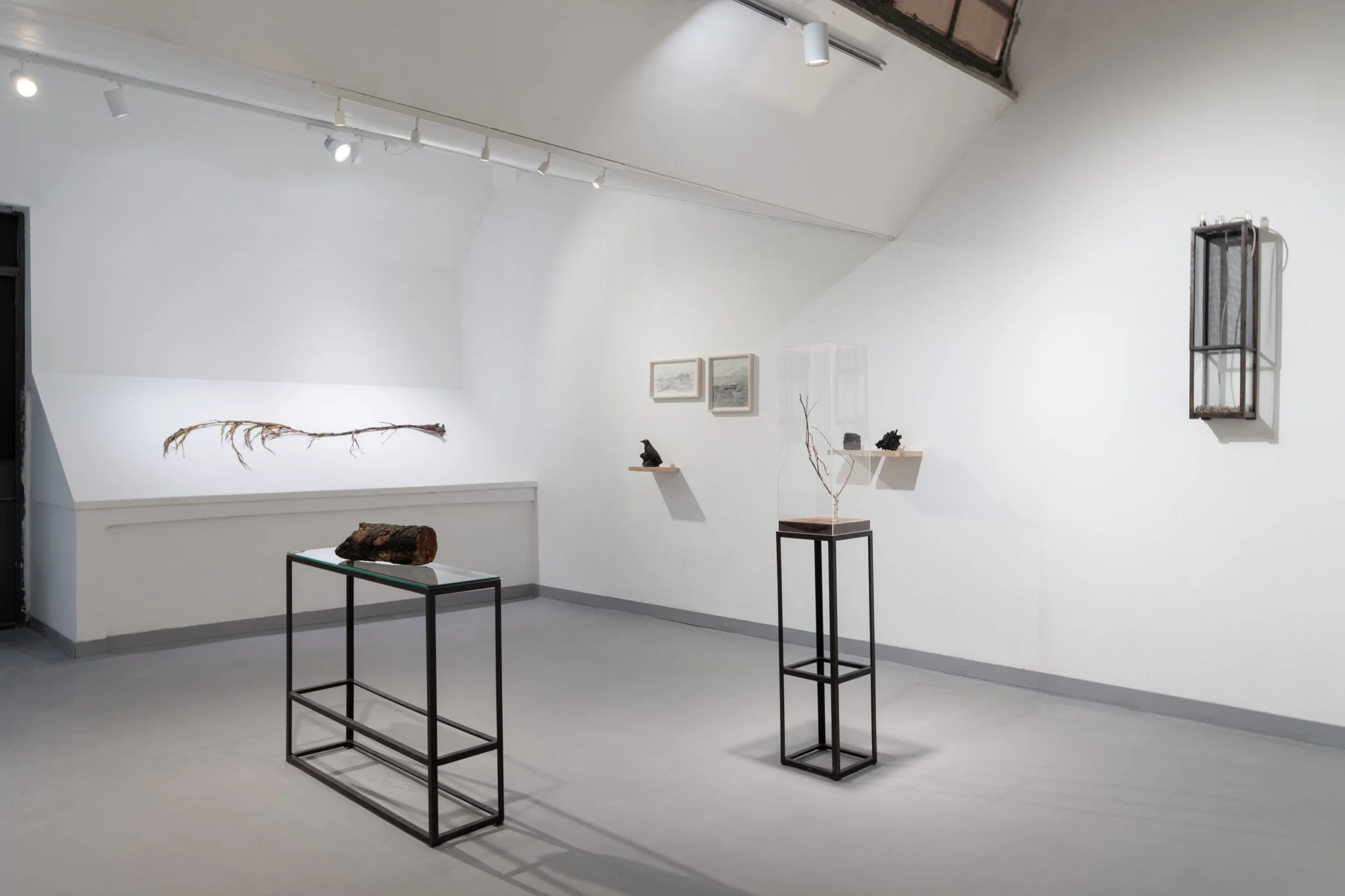
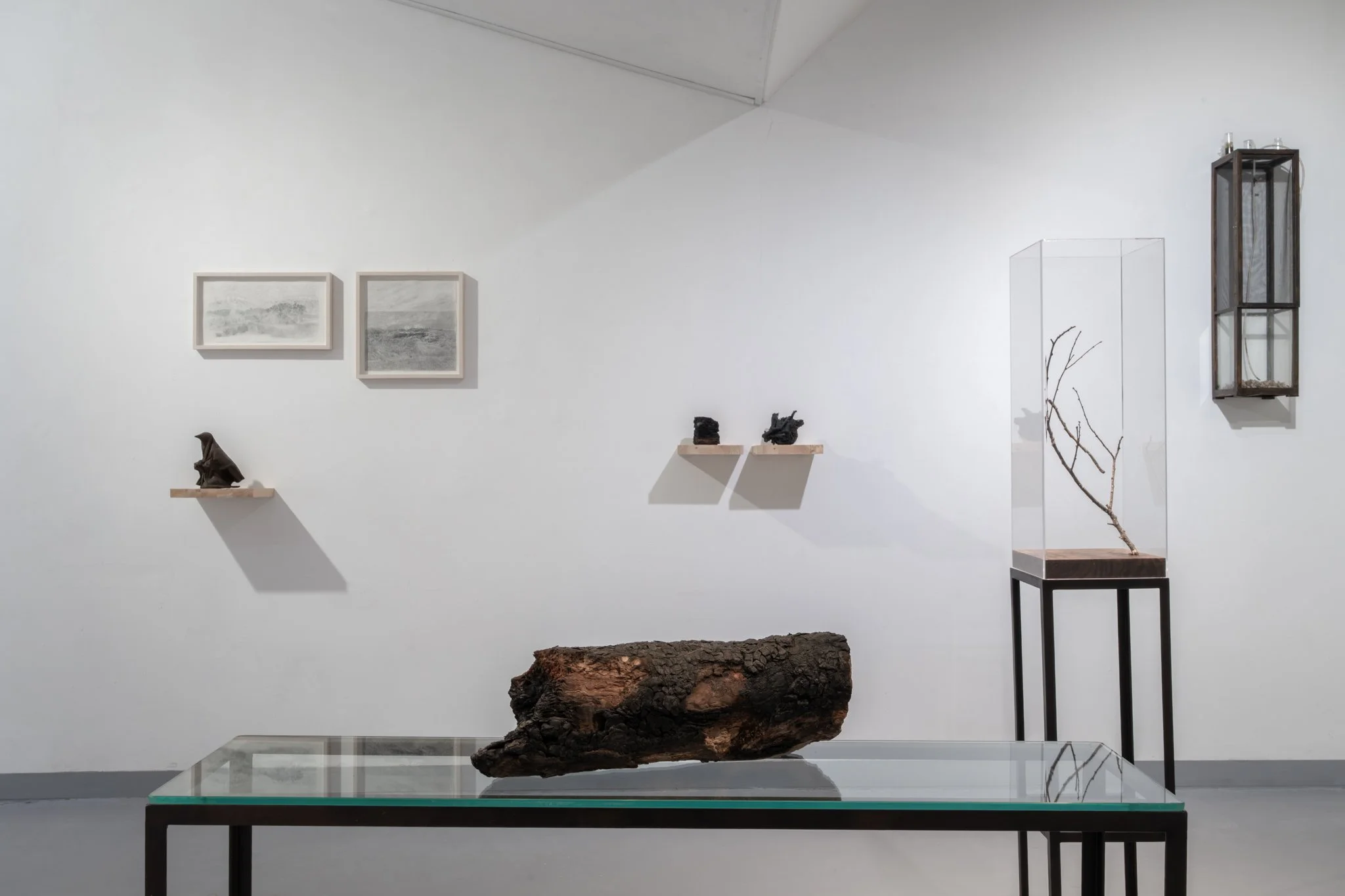
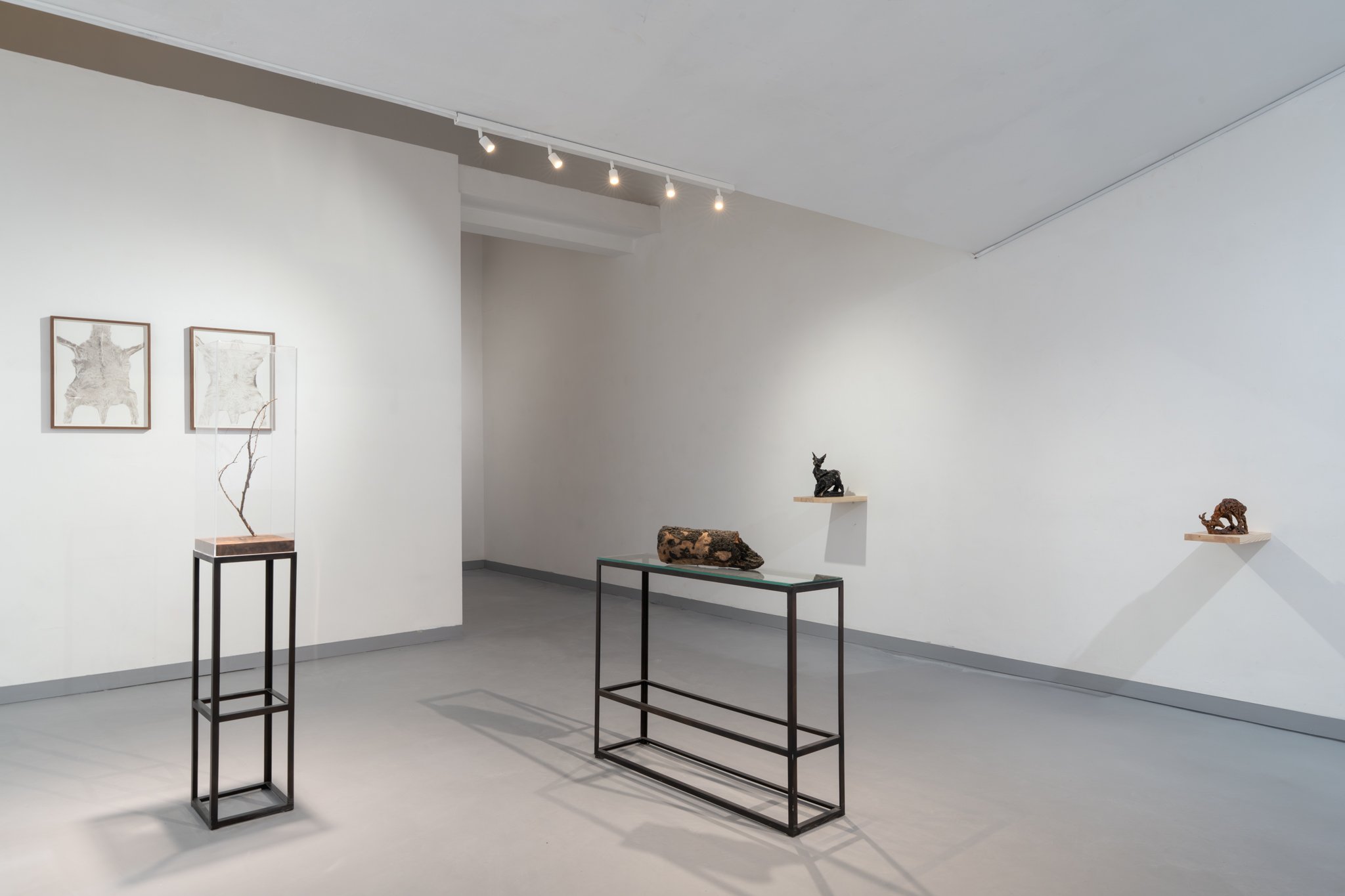
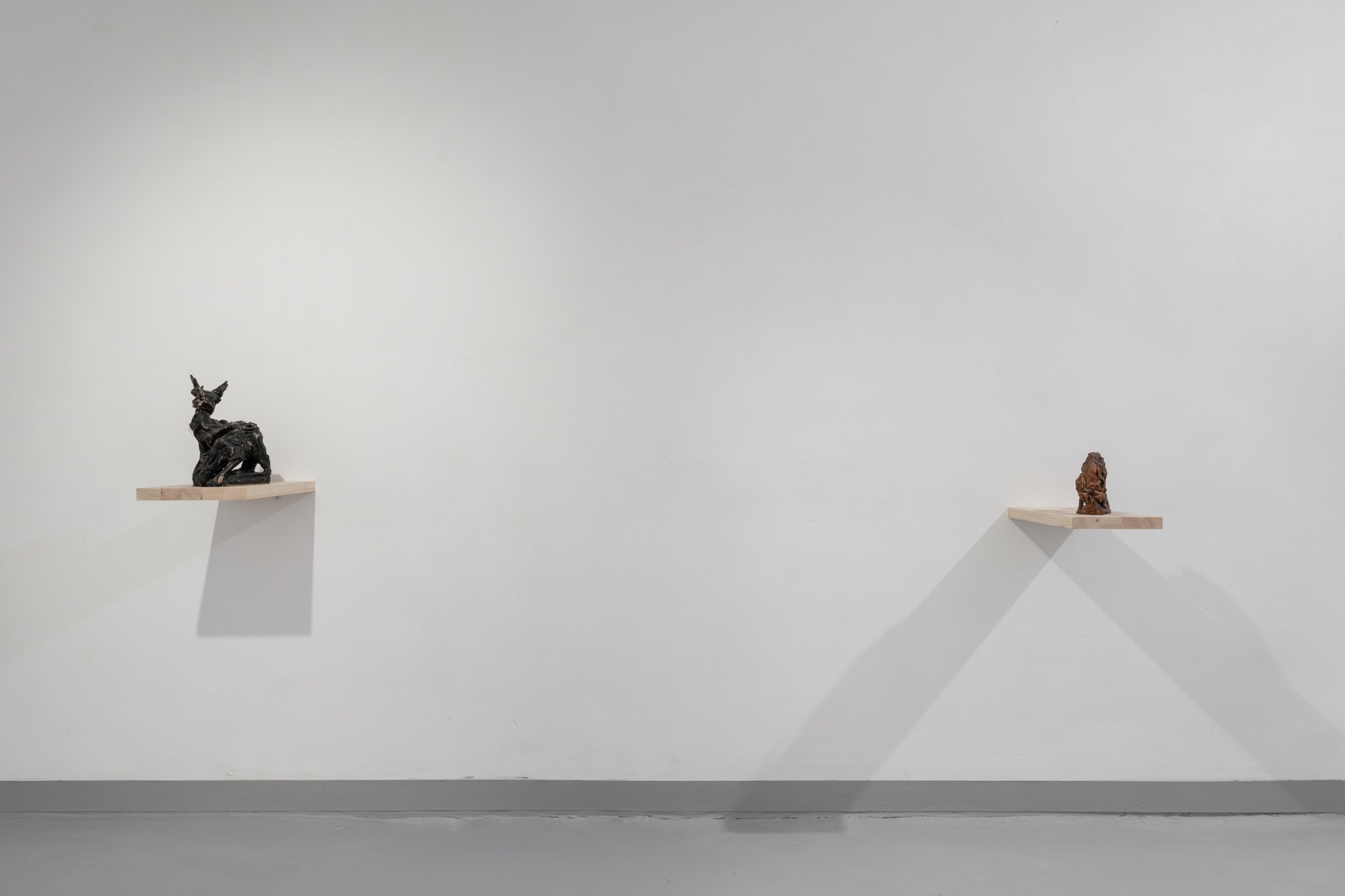
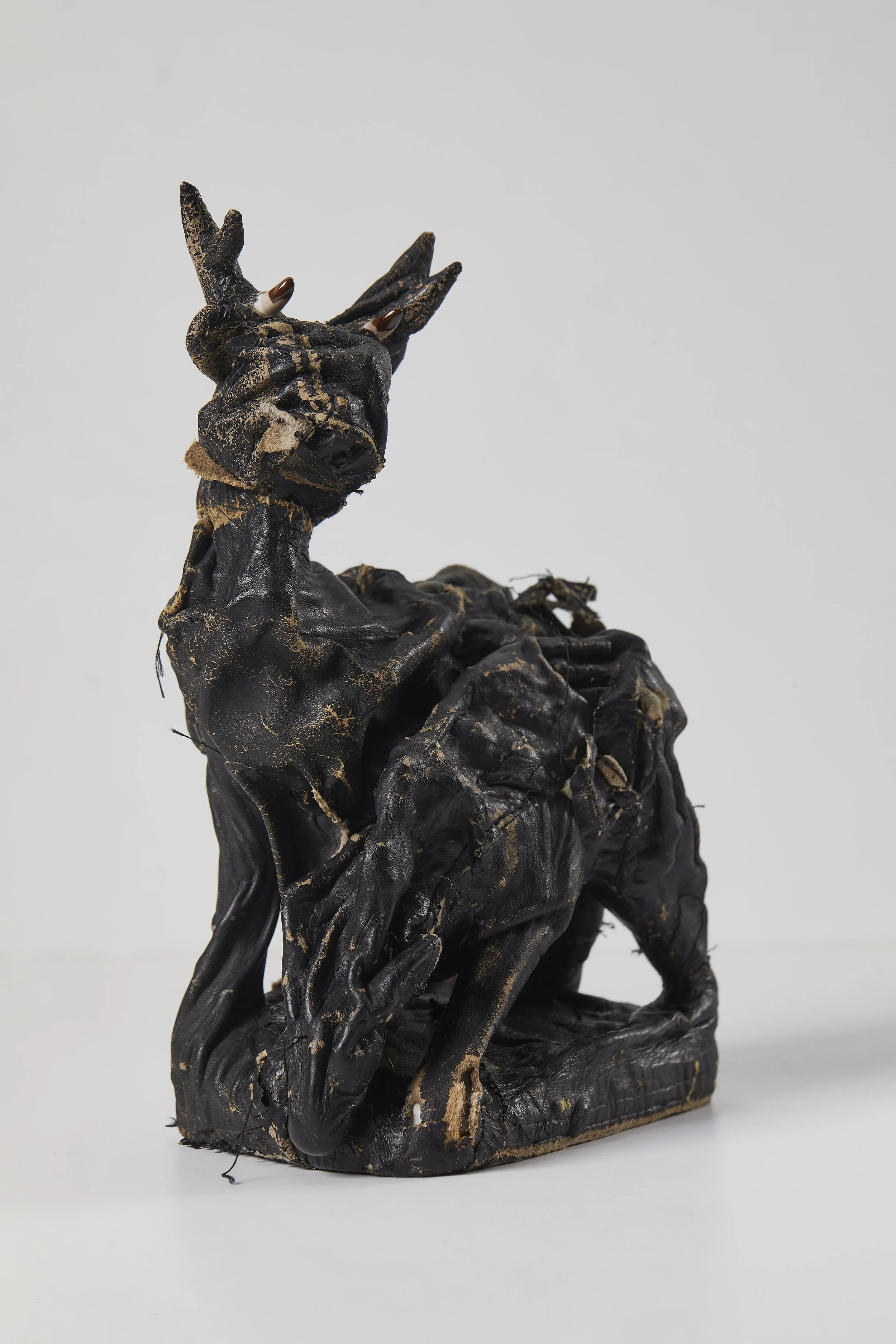
Pair of Deer, 2025, recycled leather over vintage porcelain statue, 18x26.4x12.3 cm
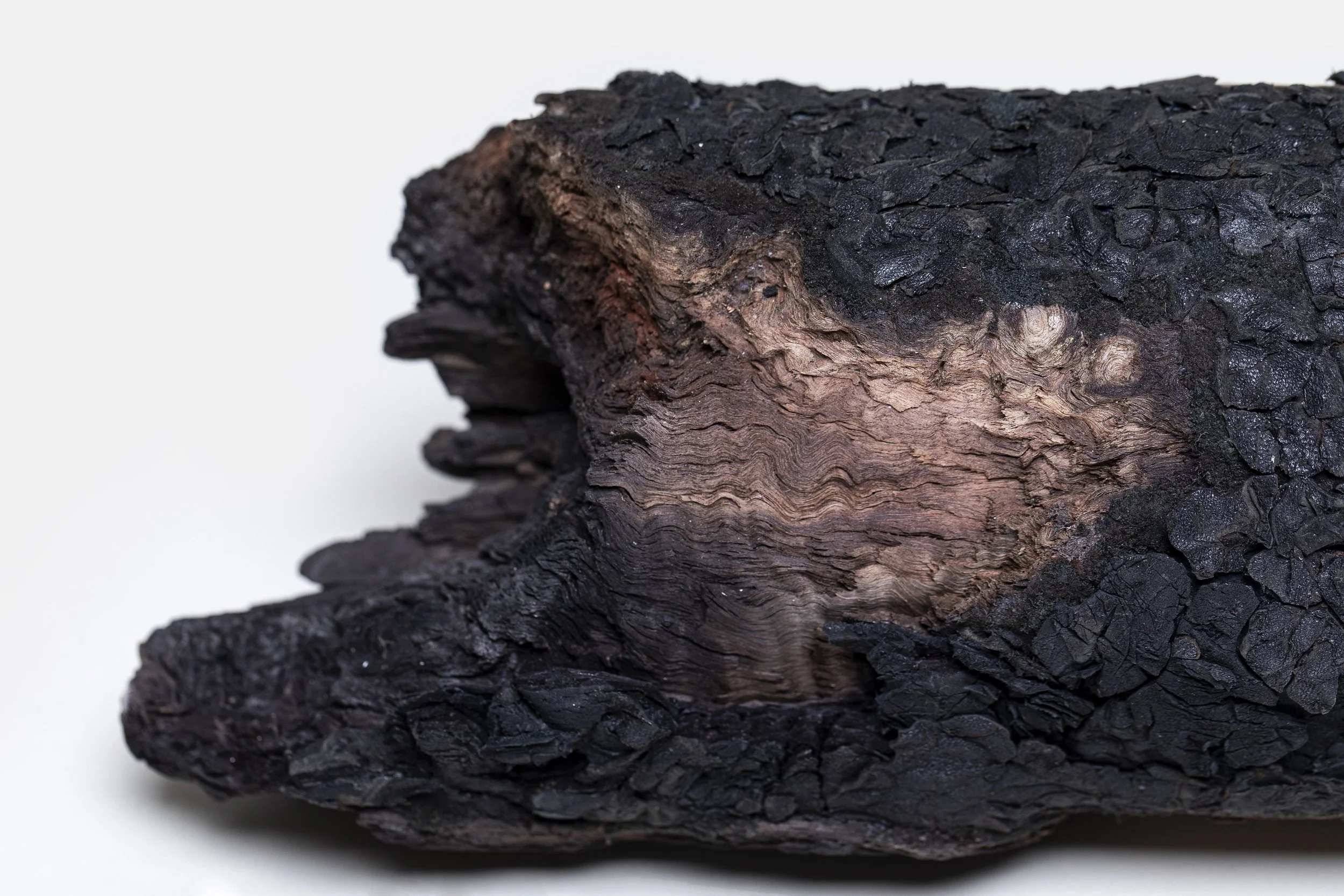
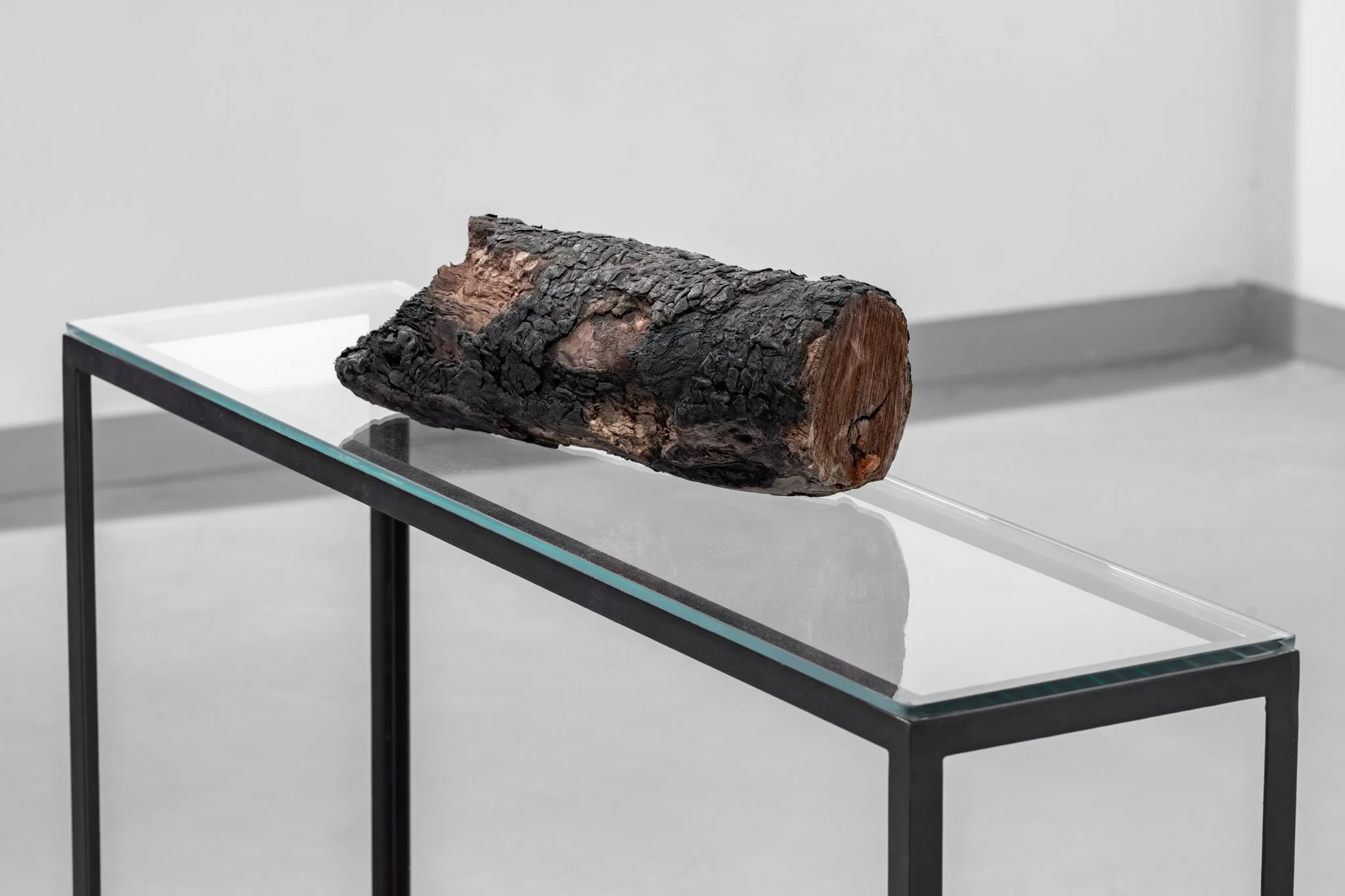
Live Timber (detail), 2020, Eucalyptus found timber, recycled leather, 40.5x14.2x13.2 cm
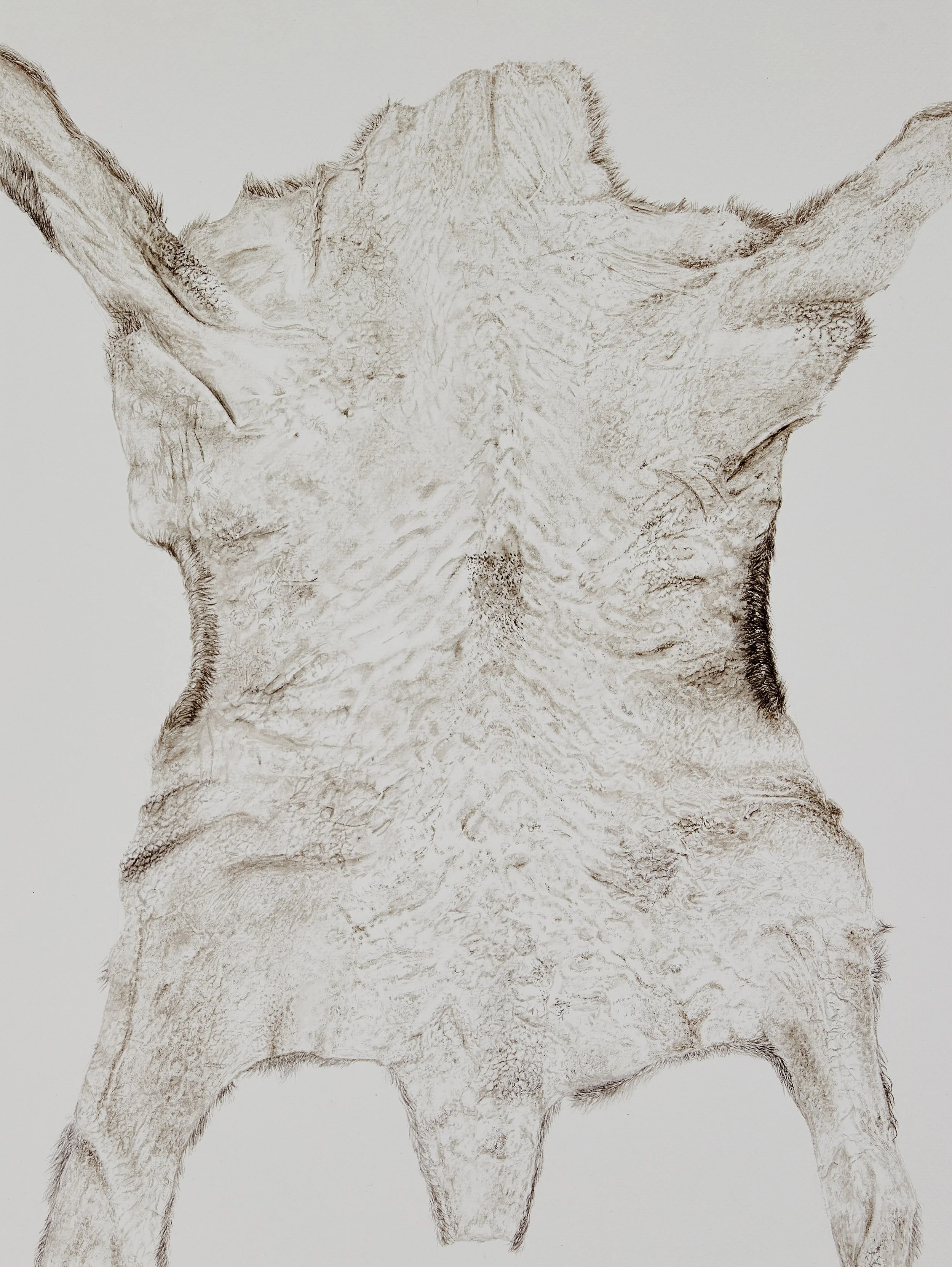
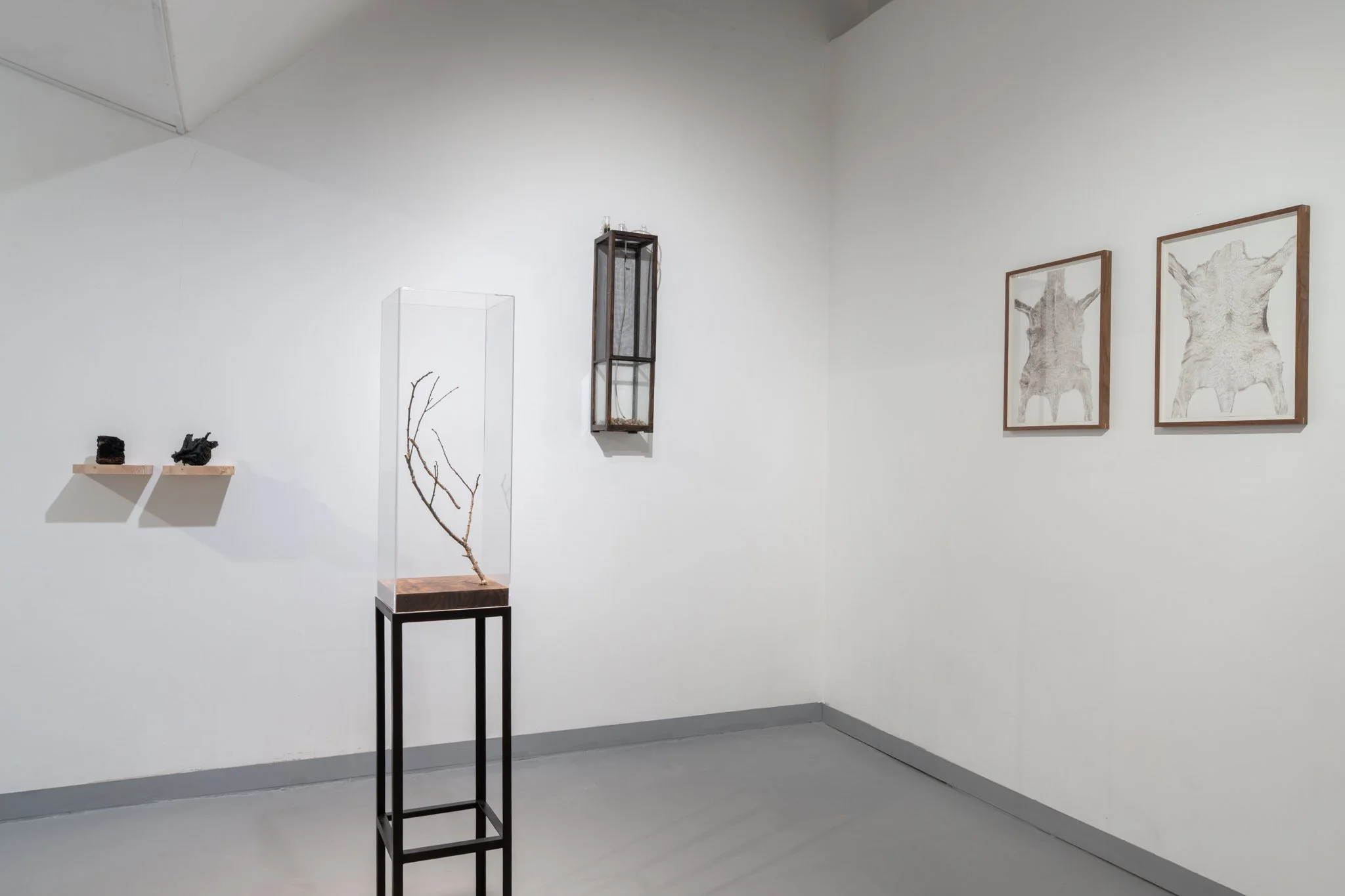
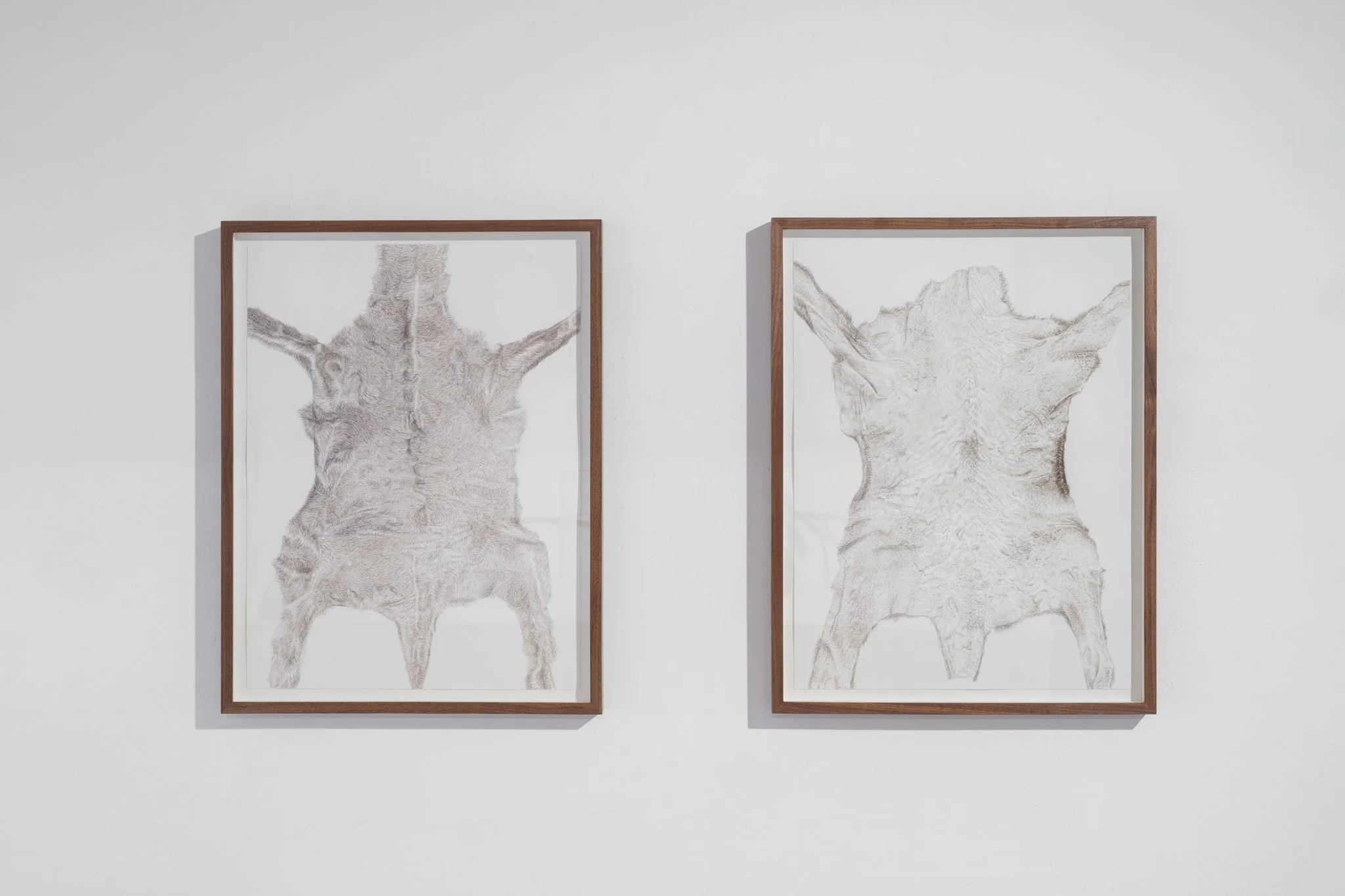
Karakul lamb, 2023, watercolor on paper, 48x36 cm
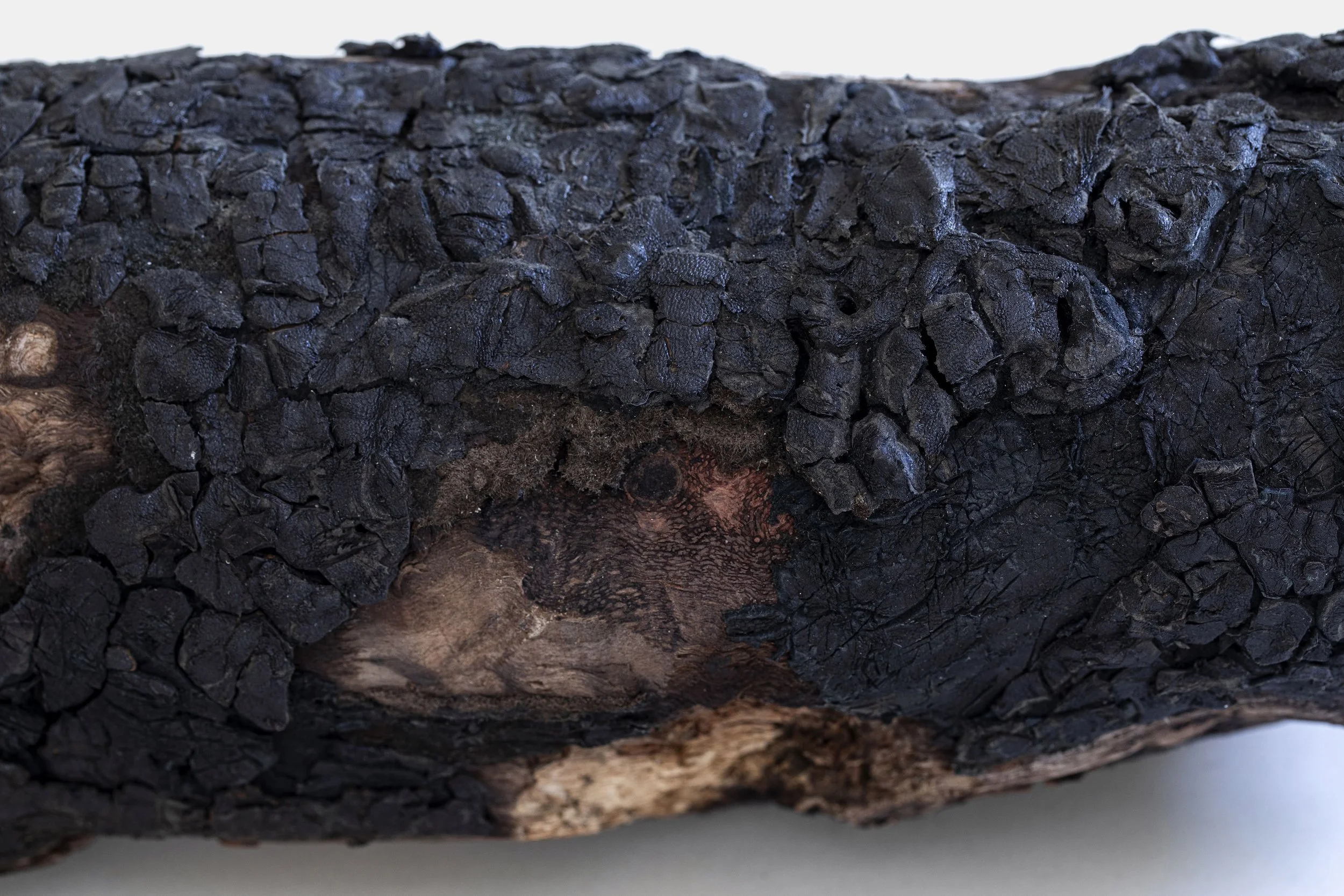
Live Timber (detail), 2020, Eucalyptus found timber, recycled leather, 40.5x14.2x13.2 cm
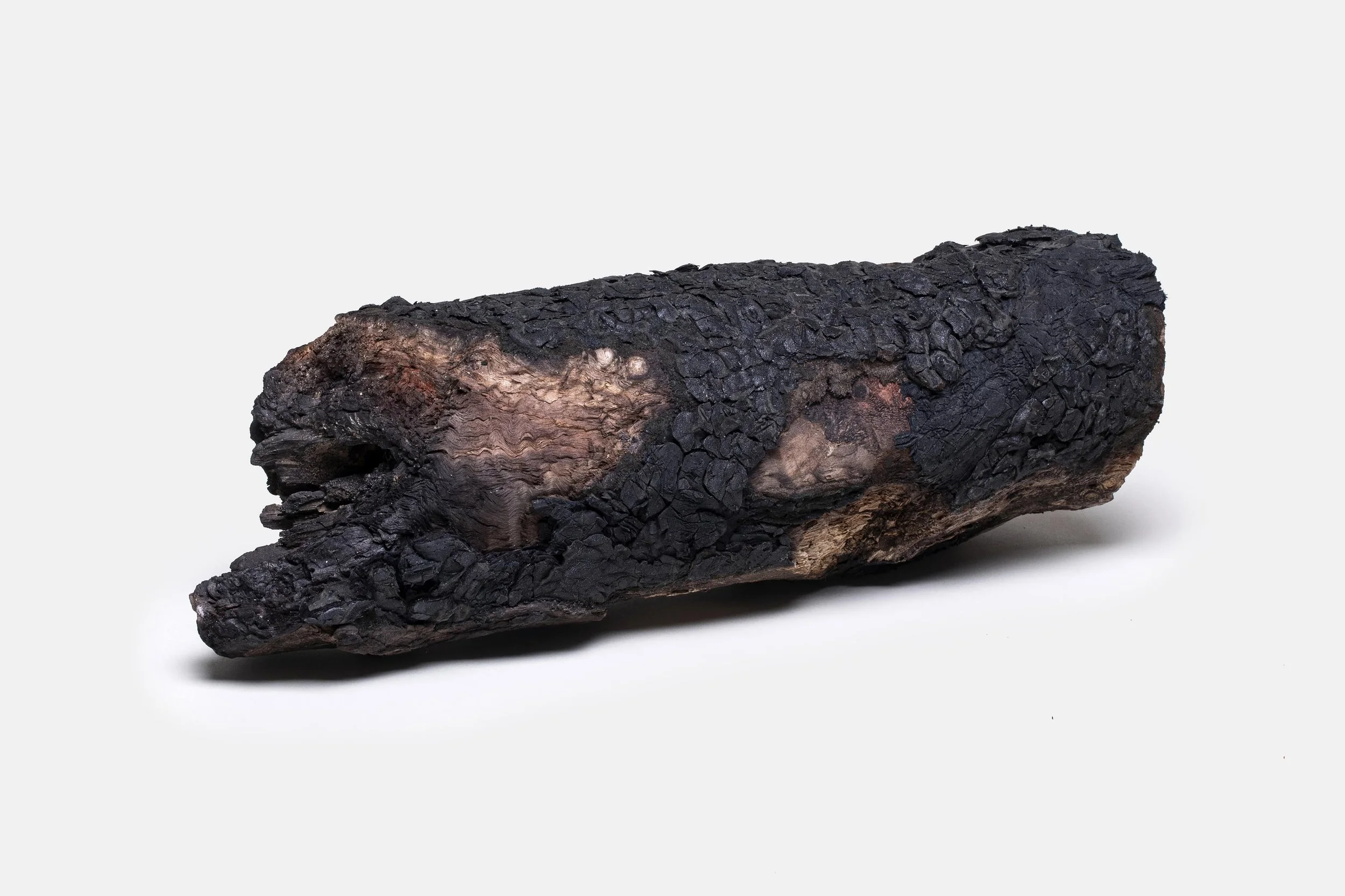
Live Timber, 2020, Eucalyptus found timber, recycled leather, 40.5x14.2x13.2 cm
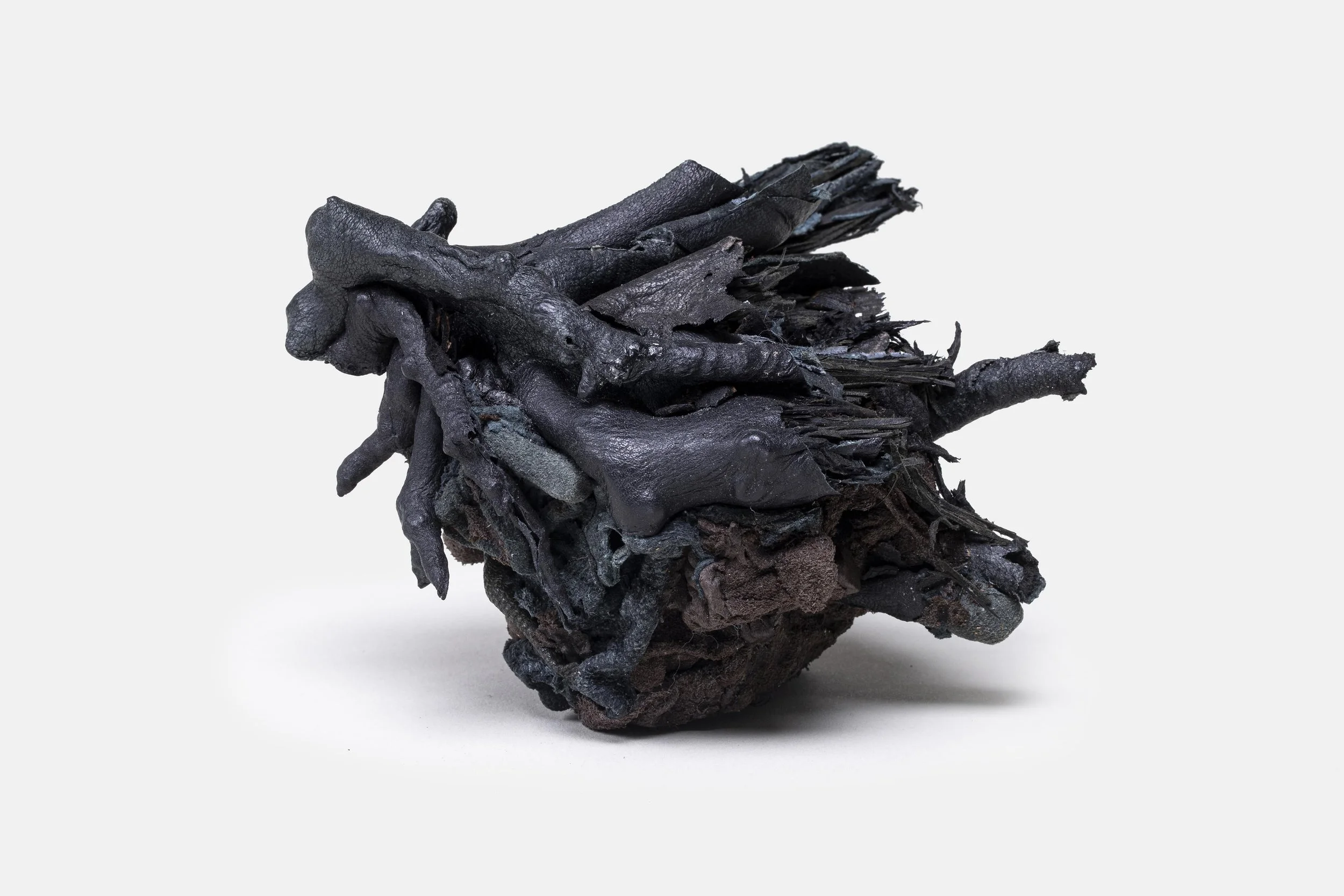
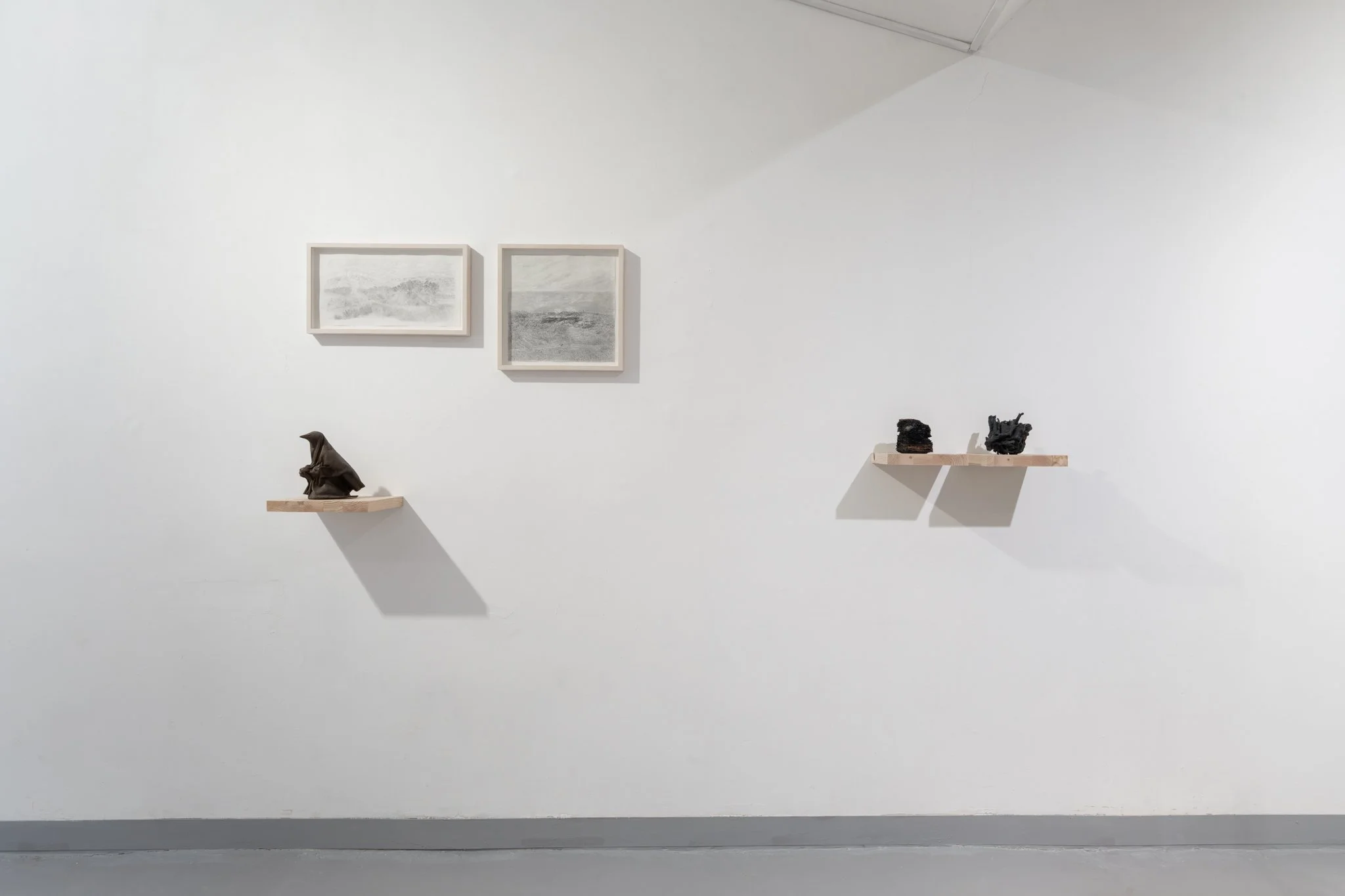
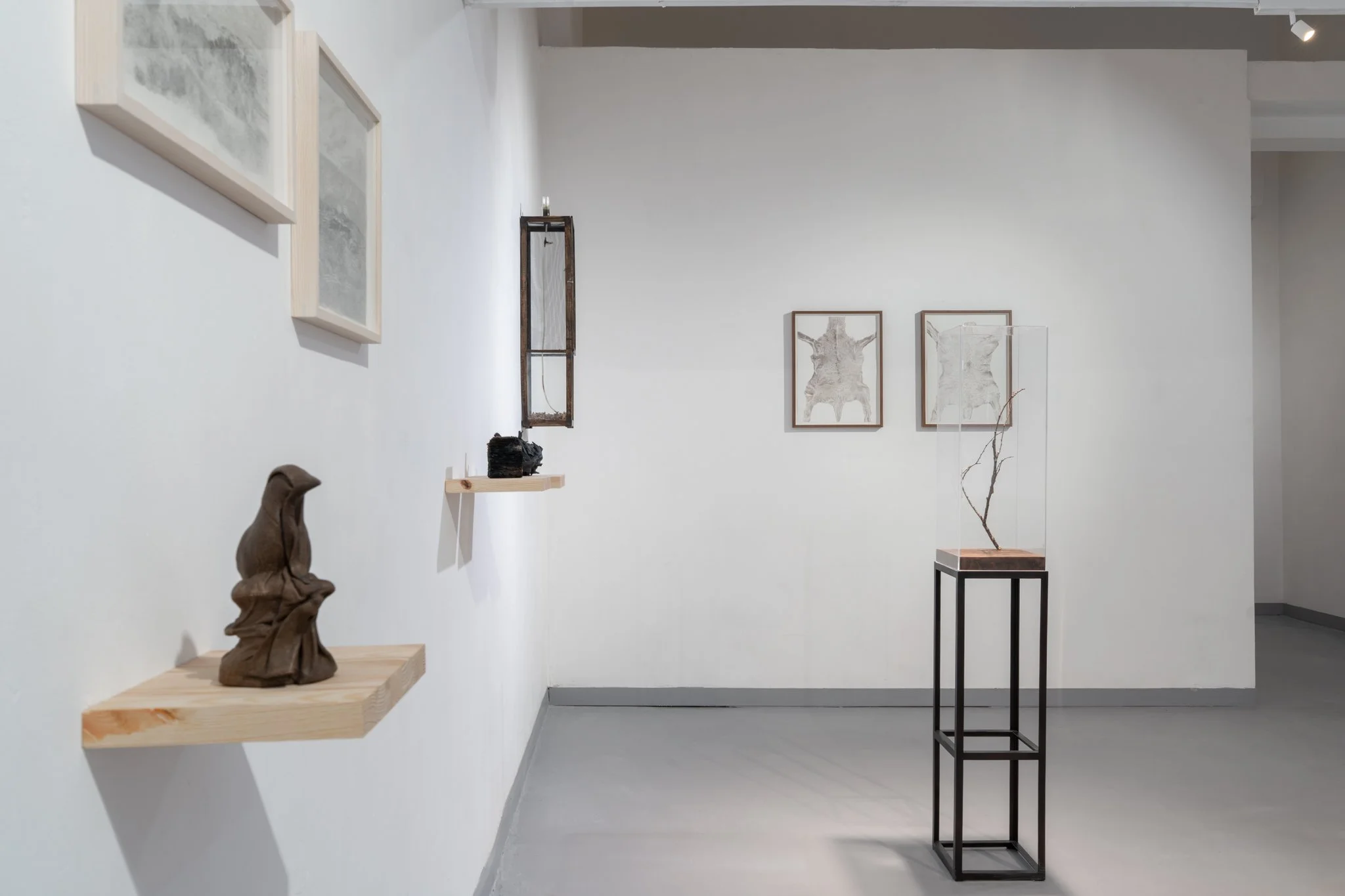
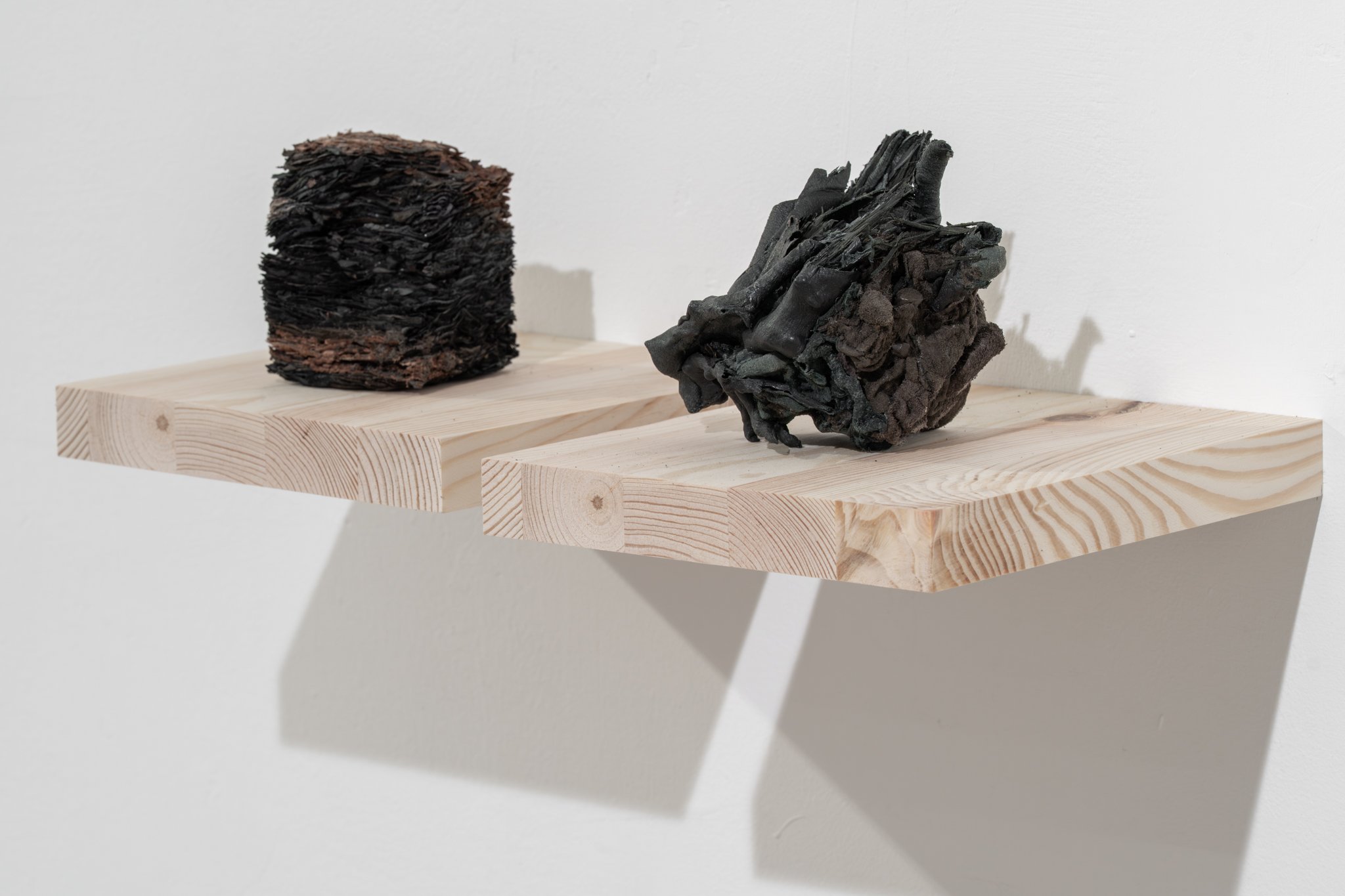
A rhizome uprooted from a scorched land, 2021, recycled leather, 13.2x9.9x9.7 cm
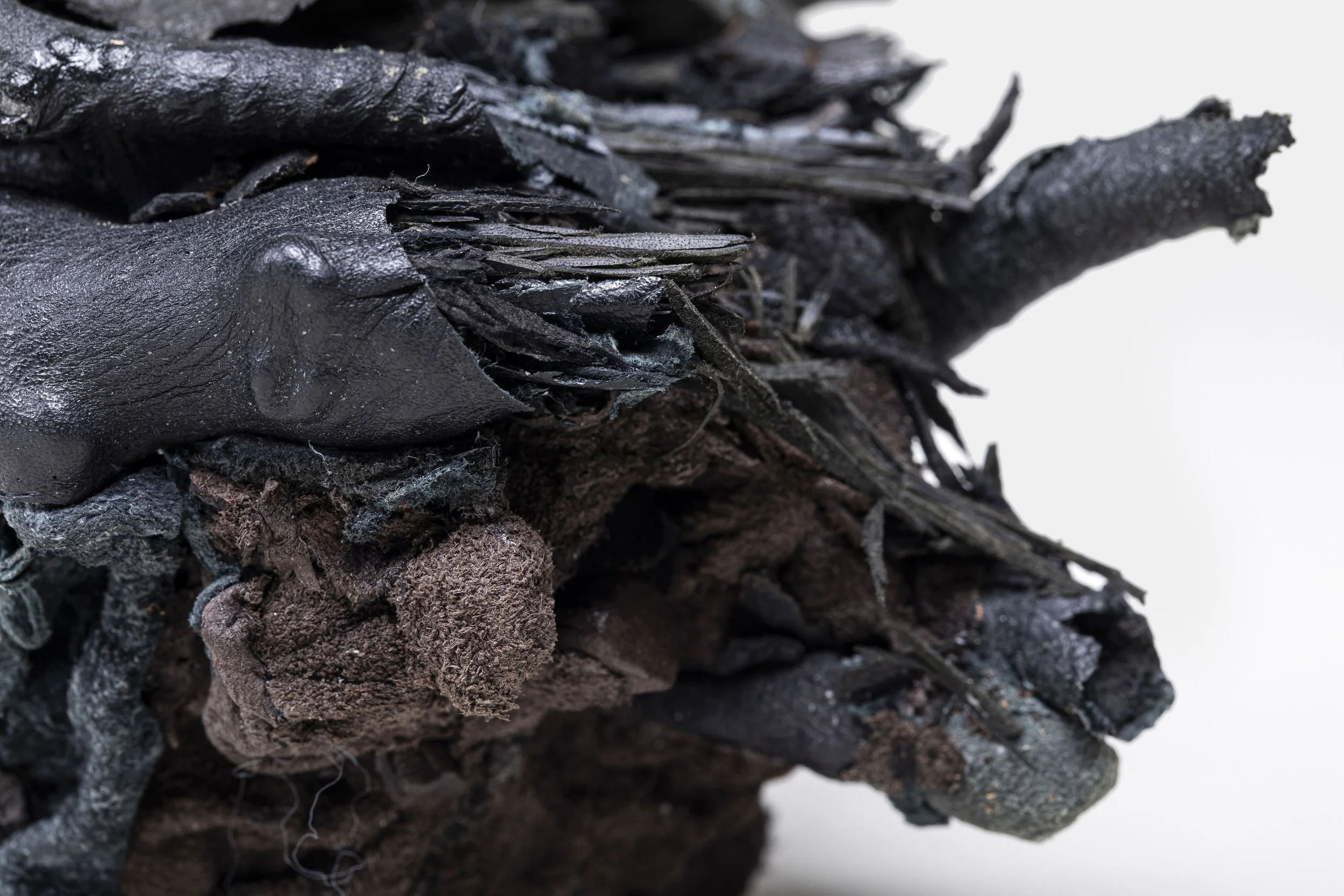
A rhizome uprooted from a scorched land (detail), 2021, recycled leather, 13.2x9.9x9.7 cm
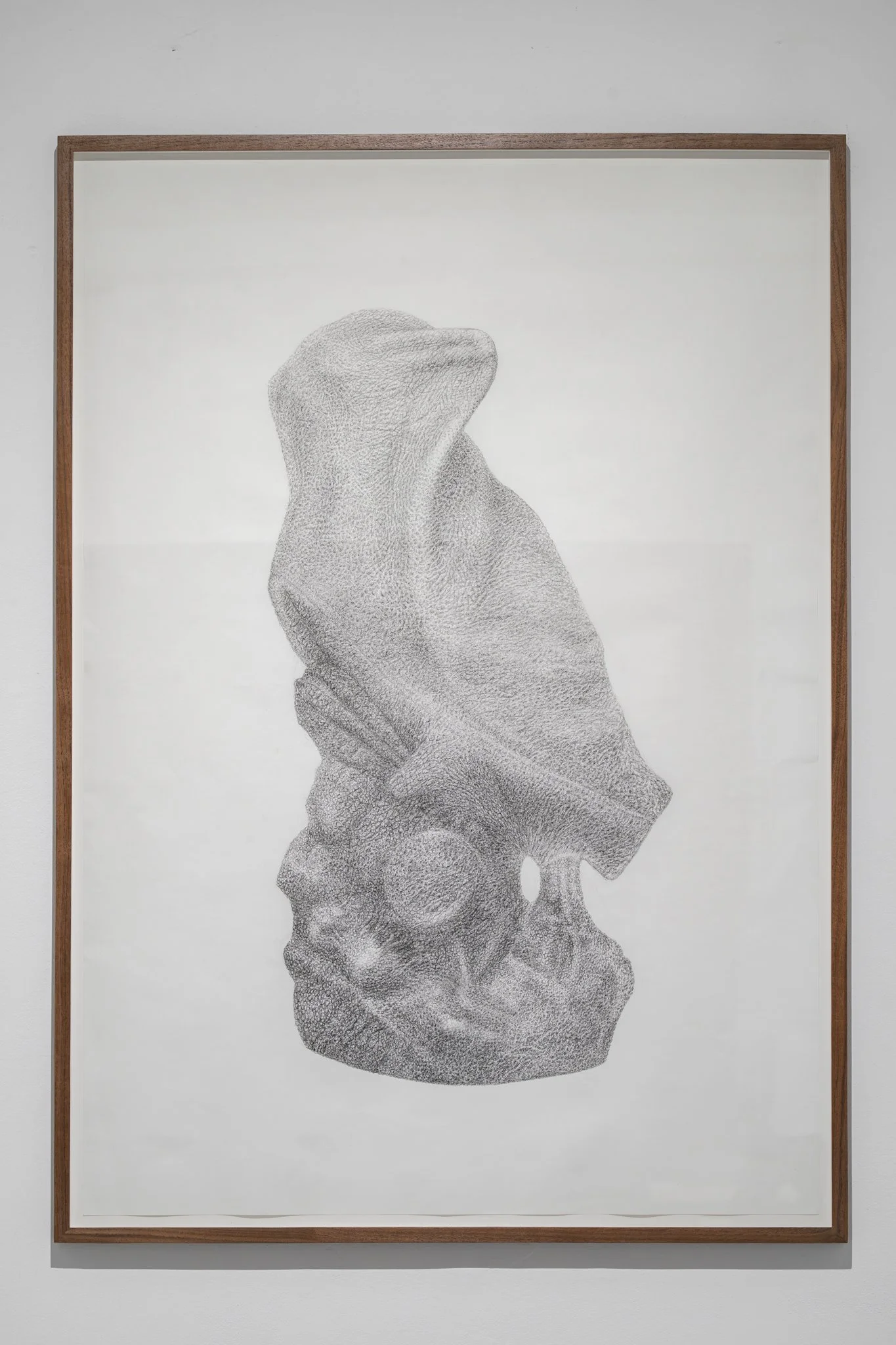
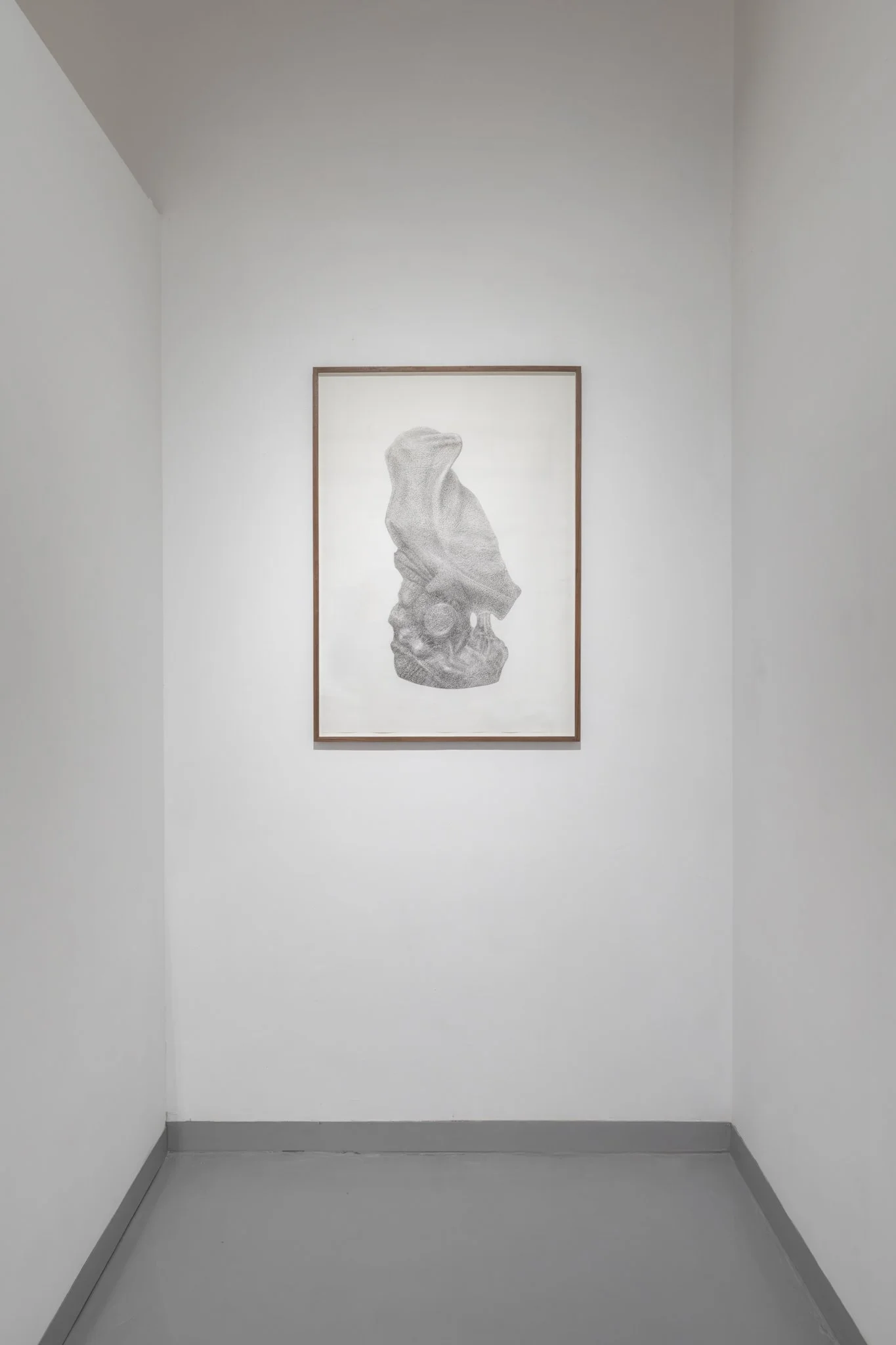
Porcelain Revival, 2024, charcoal on paper, 100x70 cm (framed in oak tree: 74.9x105 cm)

Letter to a Deer, 2024, recycled leather, vintage Kaiser Porcelain statue 23x14.8x7.4 cm
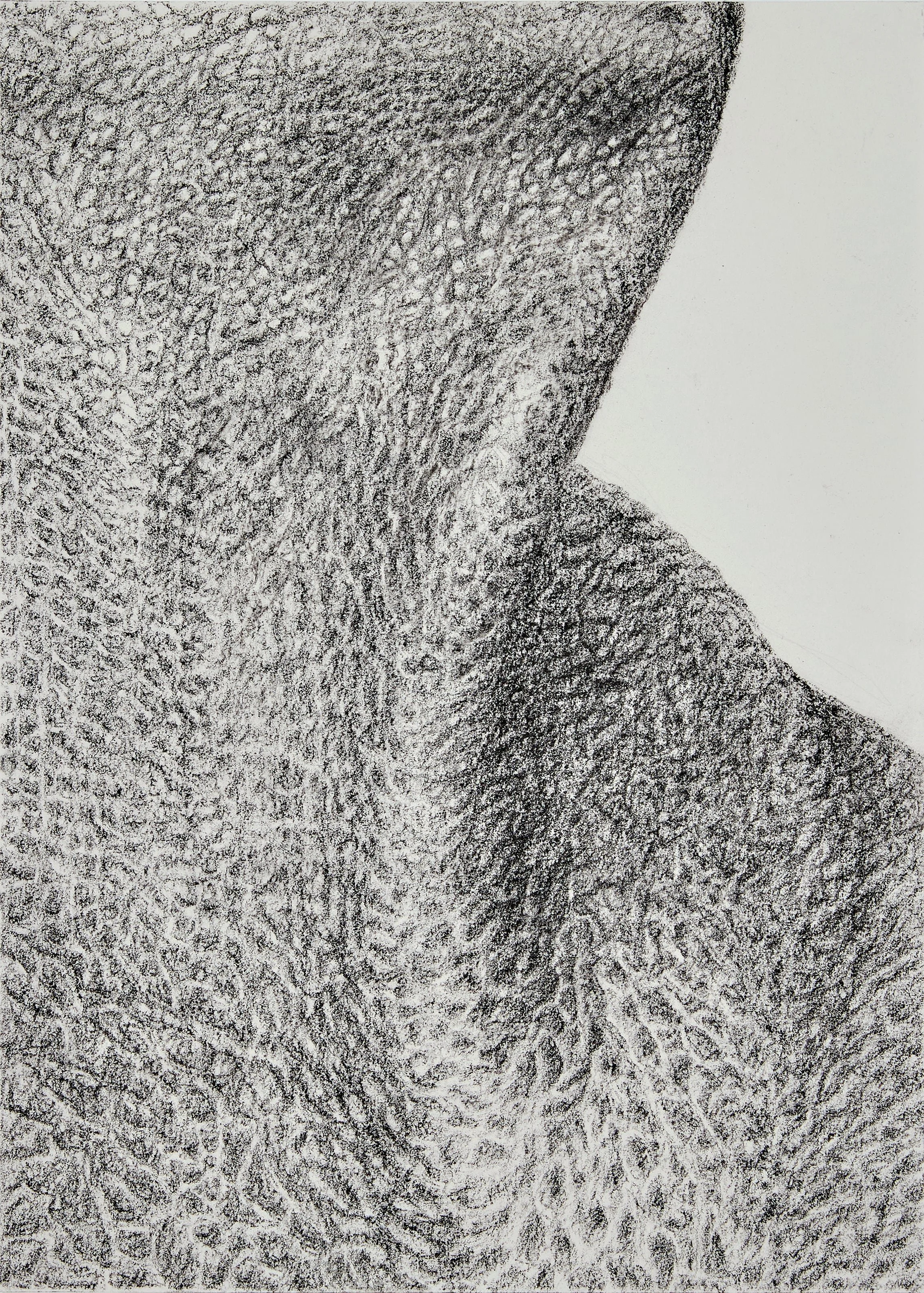
Porcelain Revival (detail), 2024, charcoal on paper, 100x70 cm

Letter to a Deer (detail), 2024, recycled leather, vintage Kaiser Porcelain statue 23x14.8x7.4 cm
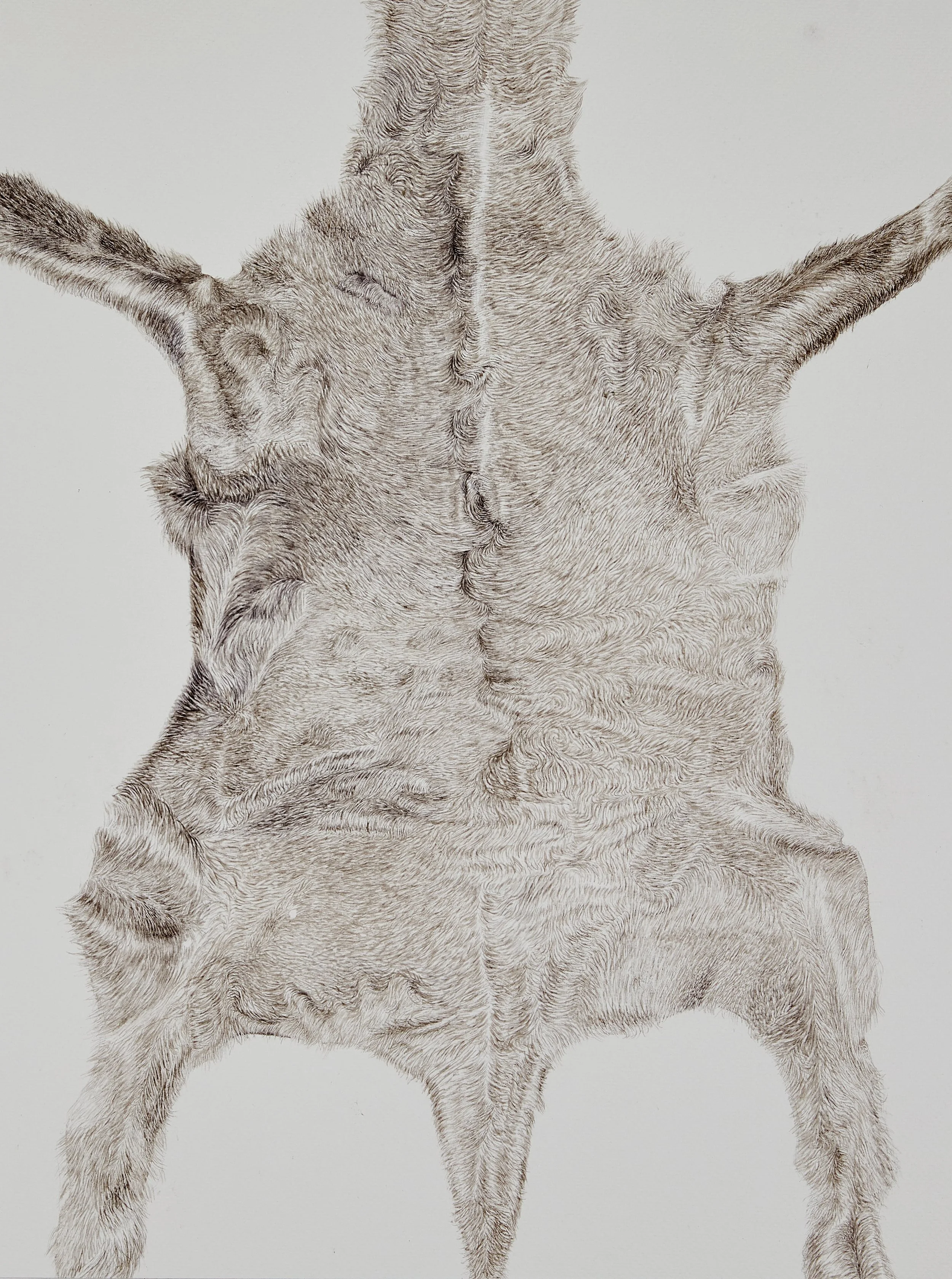
Karakul Lamb, 2023, watercolor on paper, 48x36 cm (framed in Oak tree: 53x41 cm)
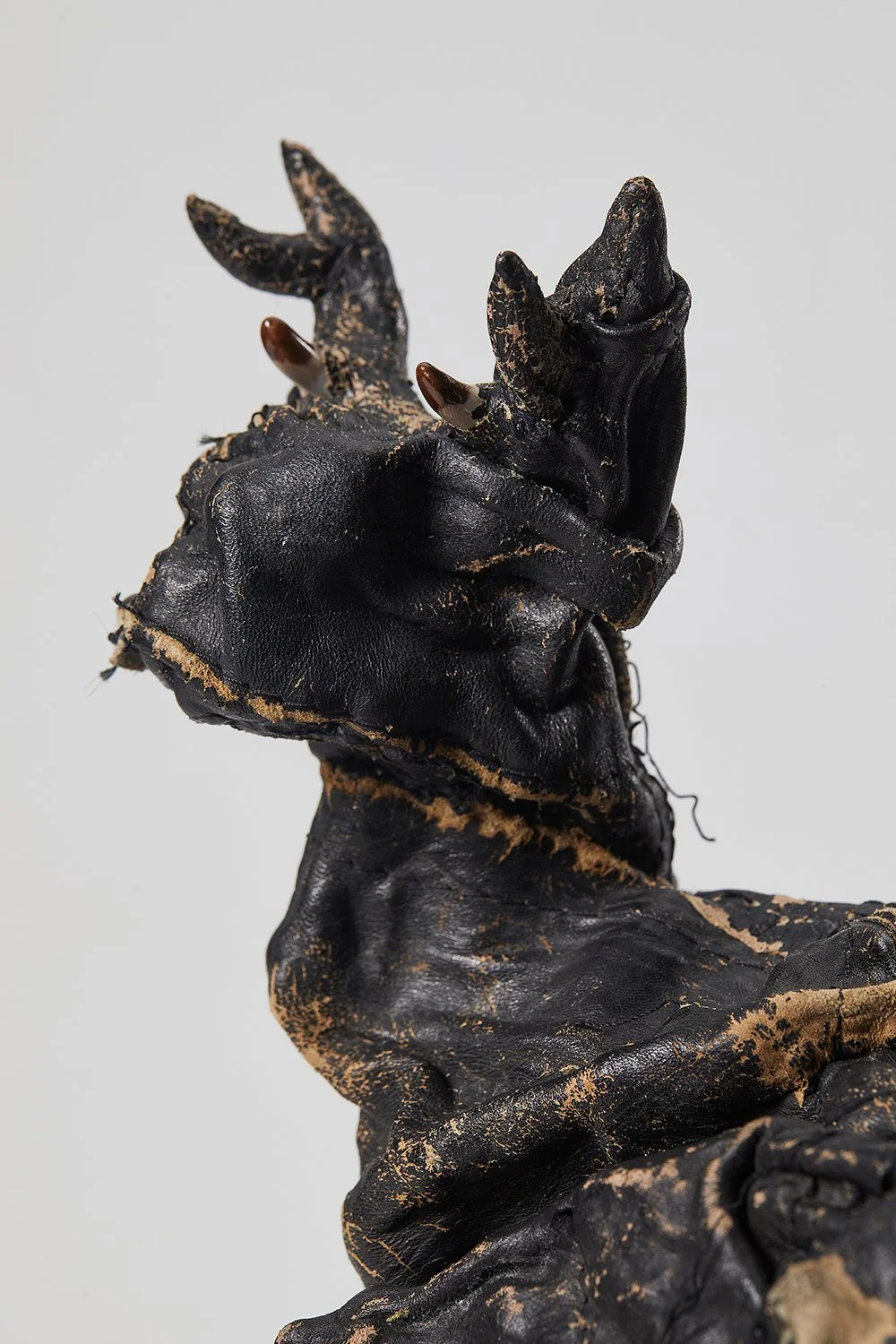
Pair of Deer (detail), 2025, recycled leather over vintage porcelain statue, 18x26.4x12.3 cm
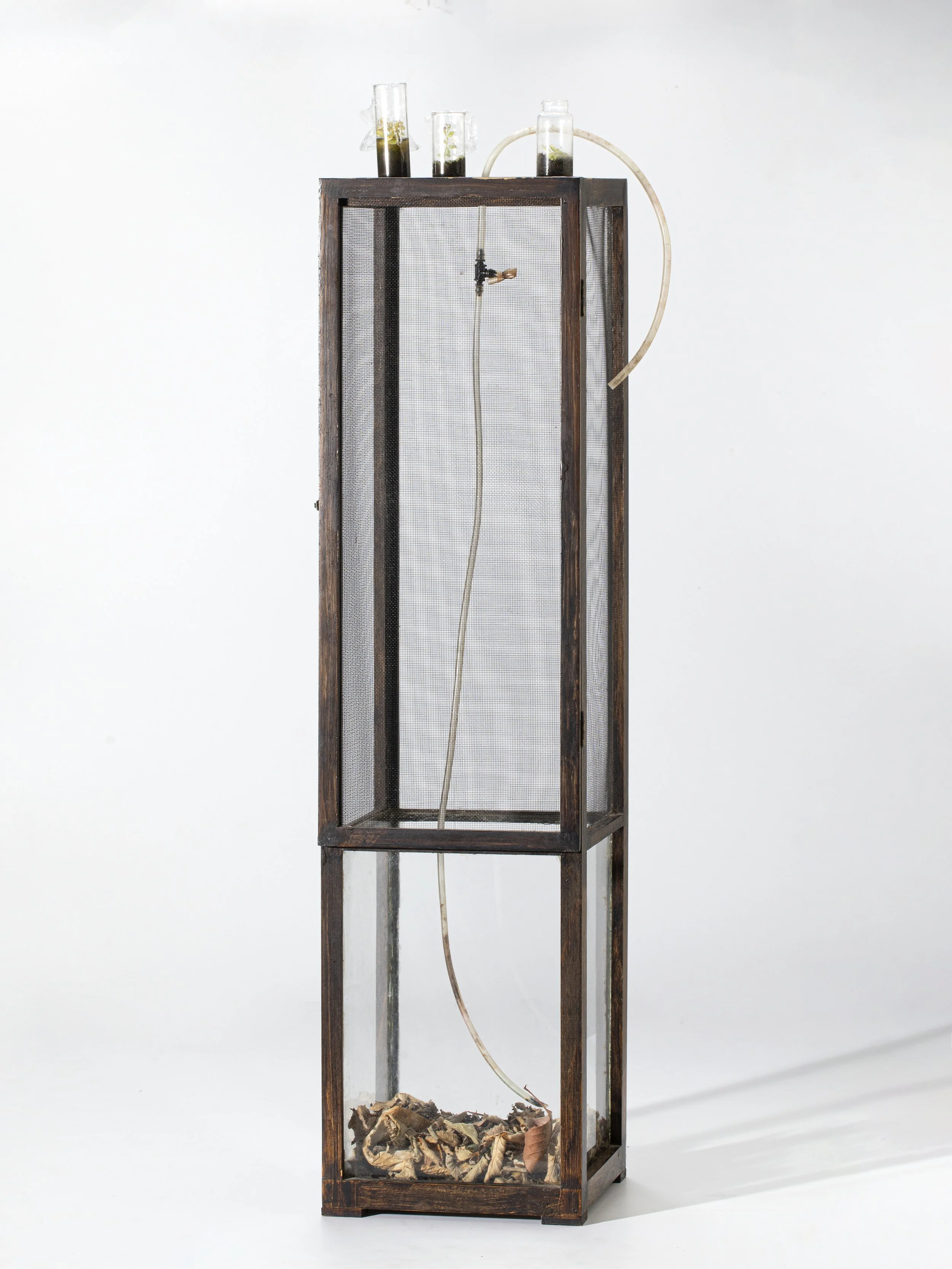
Terrarium, 2025, wood, rubber tube, plastic connector, mesh, glass, test tubes with cuttings, dried Rubus ulmifolius. sanctus leaves, eggs of stick insect Phyllium letiranti 82x19x18.5 cm
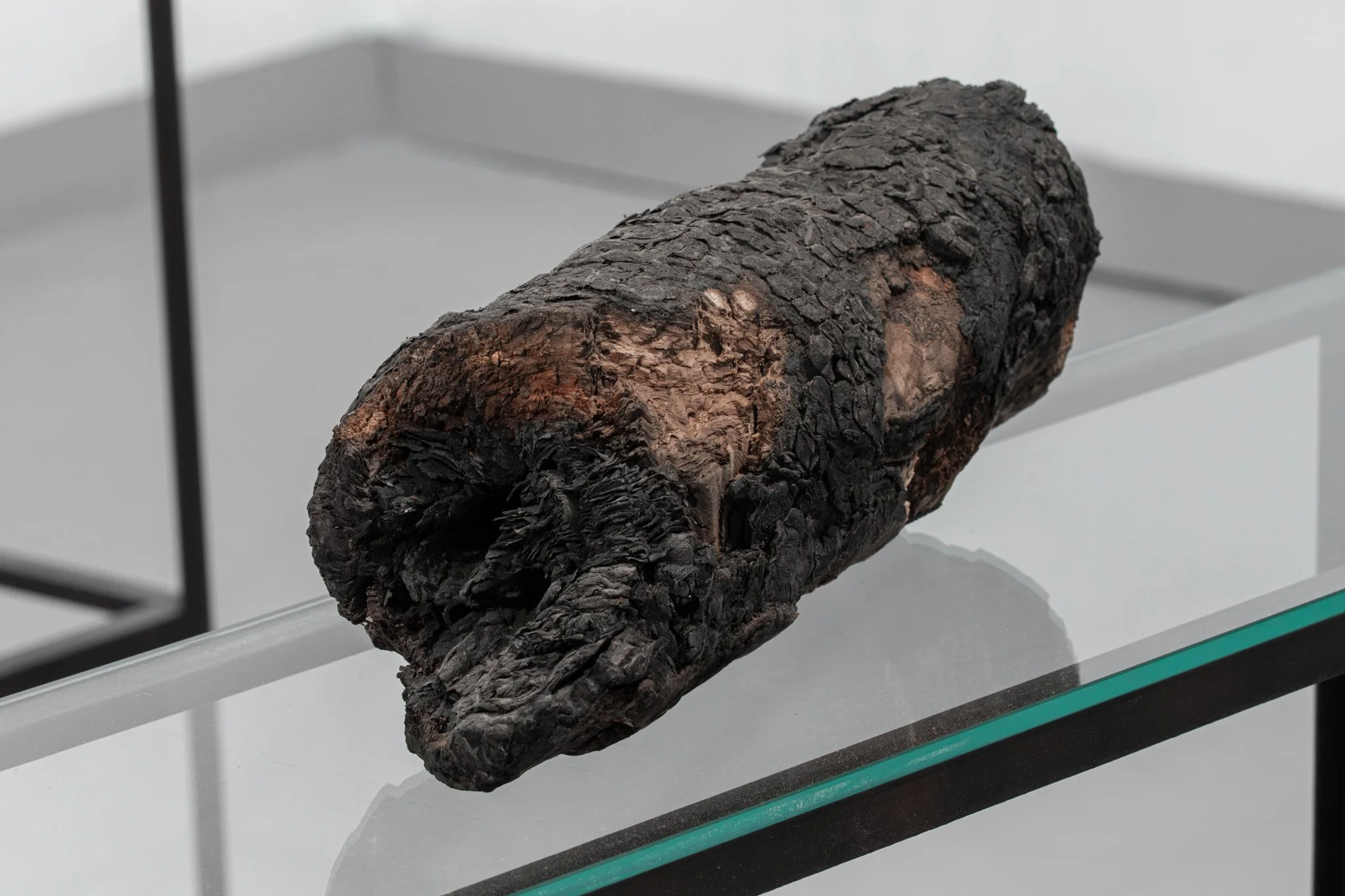
Live Timber, 2020, Eucalyptus found timber, recycled leather, 40.5x14.2x13.2 cm
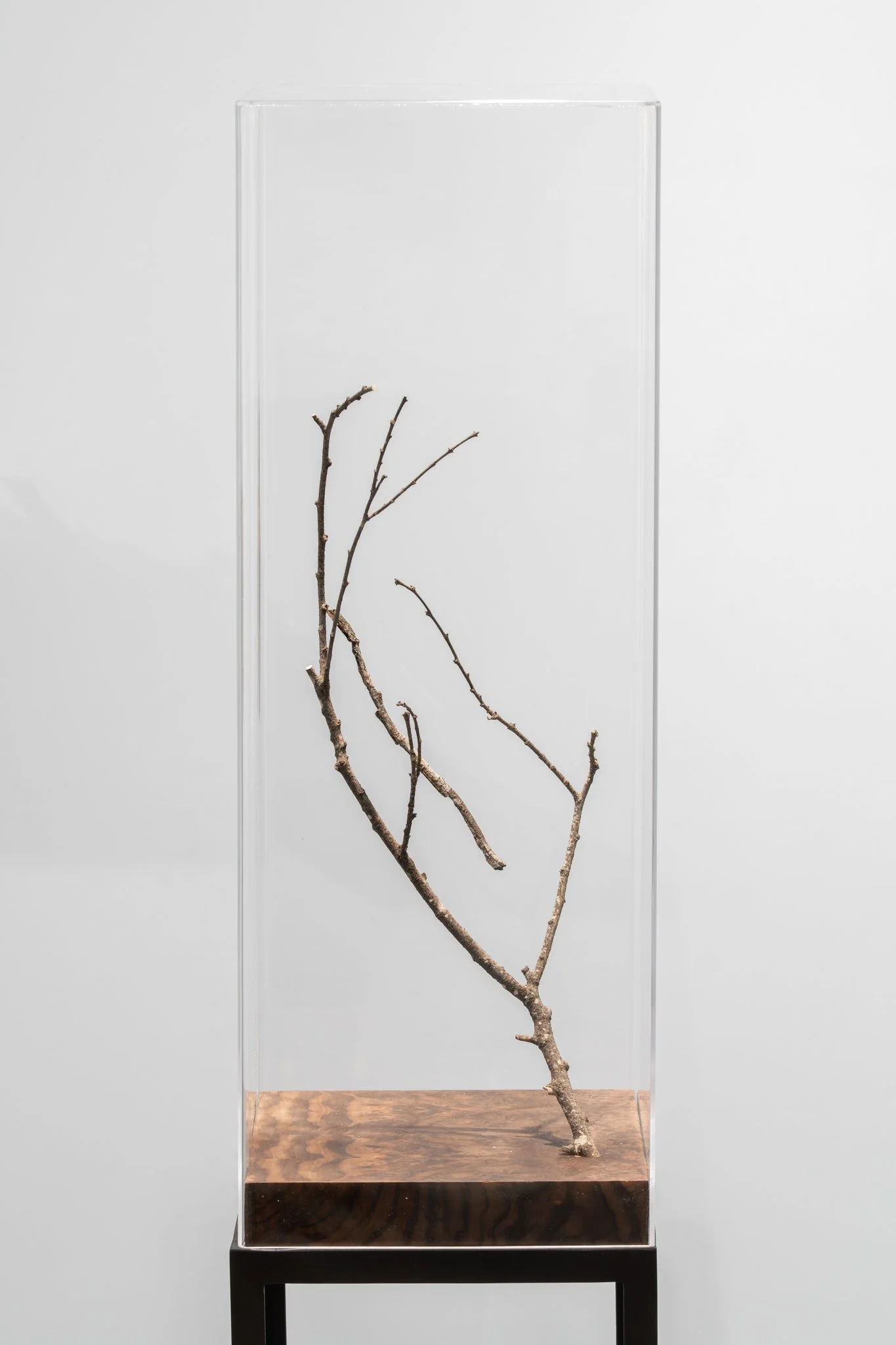
Hermagoras sigillatus, female in camouflage position (detail), 2025, preserved female specimen of stick insect Hermagoras sigillatus, tree branch, MDF base covered with walnut burl veneer, 50.5x23.7x23.7 cm
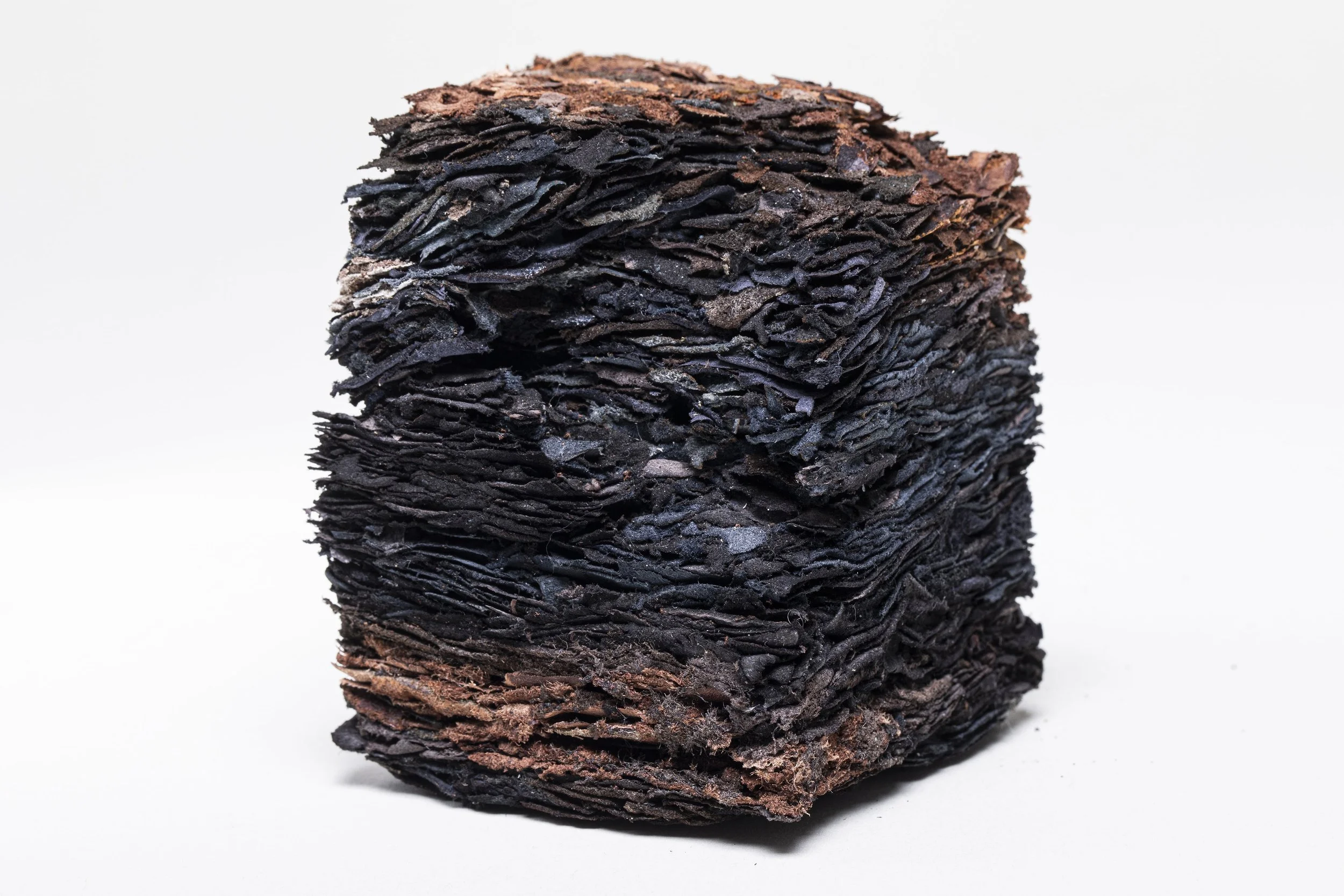
Almost completely burnt Chipboard Block, 2020-2021, recycled leather, 9x7.4x7.4 cm
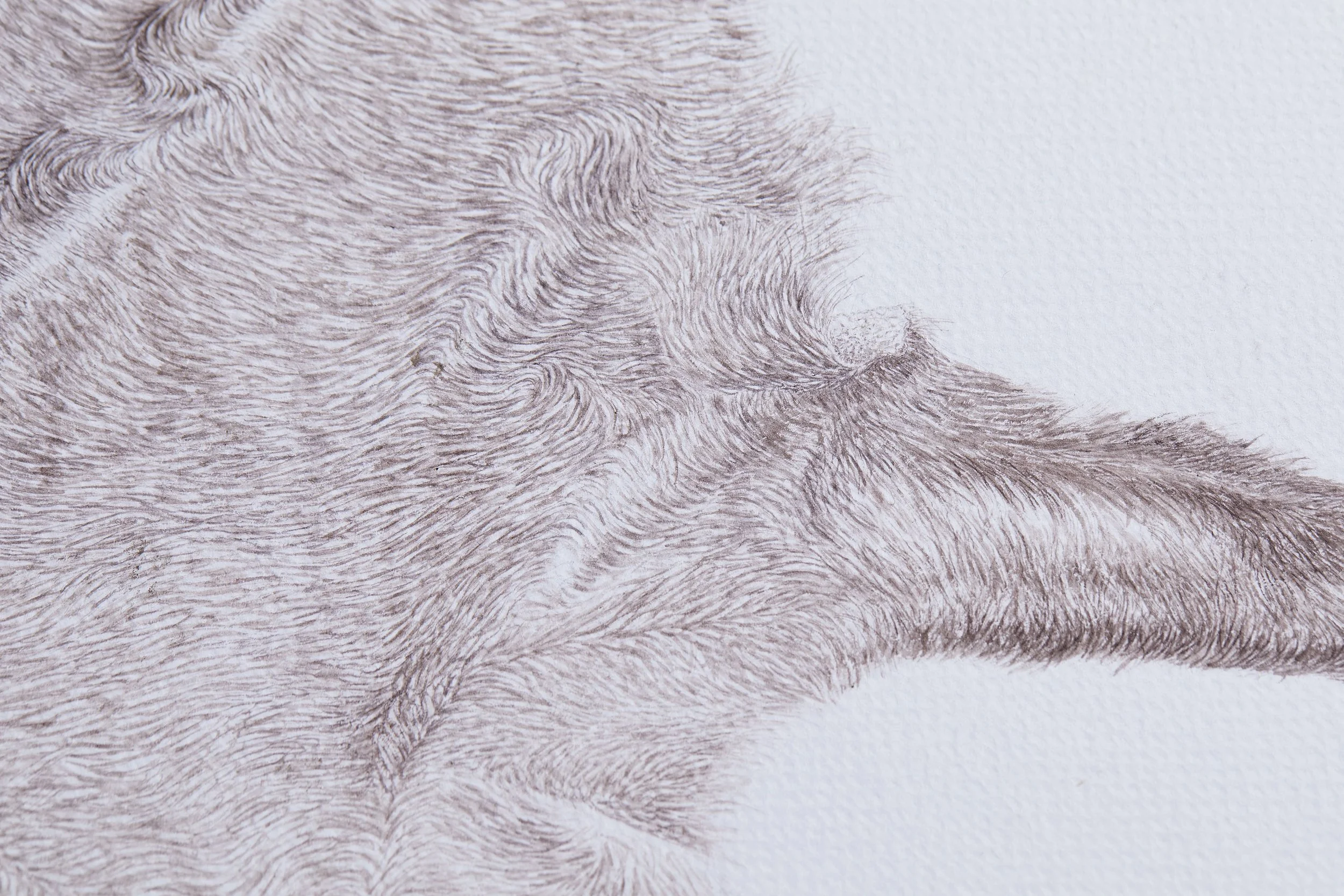
Karakul Lamb (detail), 2023, watercolor on paper, 48x36 cm (framed in Oak tree: 53x41 cm)
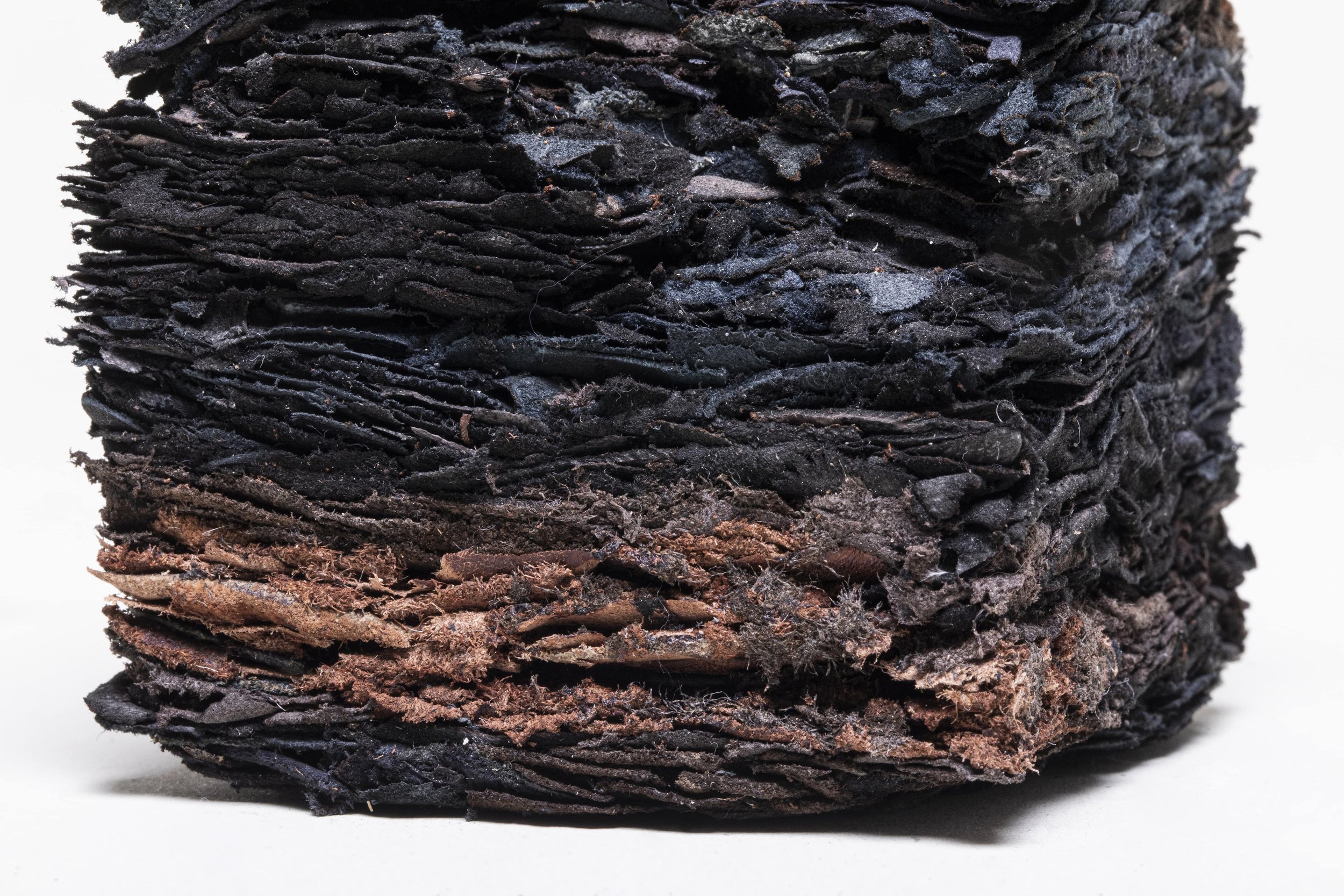
Almost completely burnt Chipboard Block (detail), 2020-2021, recycled leather, 9x7.4x7.4 cm
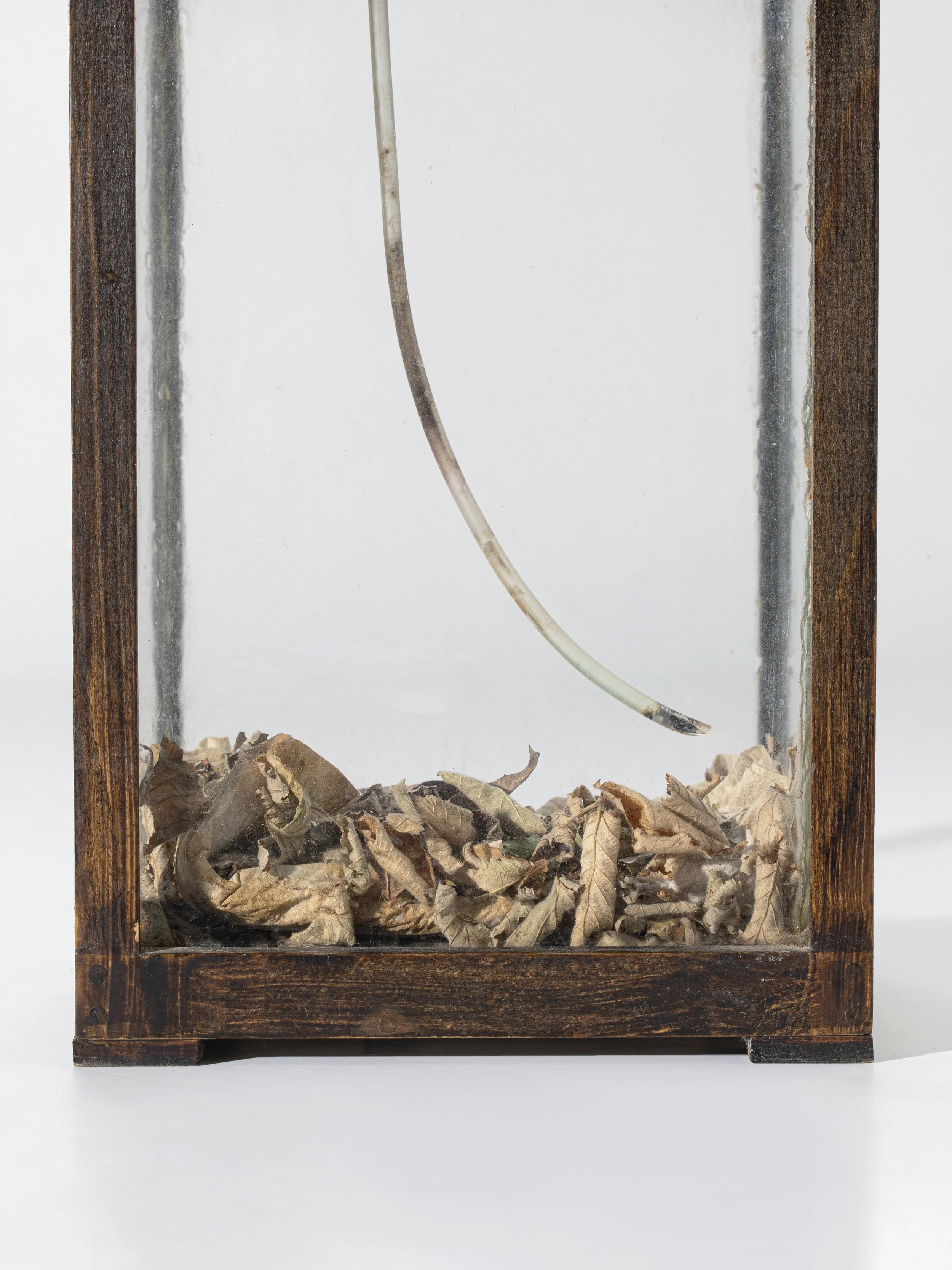
Terrarium (detail), 2025, wood, rubber tube, plastic connector, mesh, glass, test tubes with cuttings, dried Rubus ulmifolius. sanctus leaves, eggs of stick insect Phyllium letiranti 82x19x18.5 cm
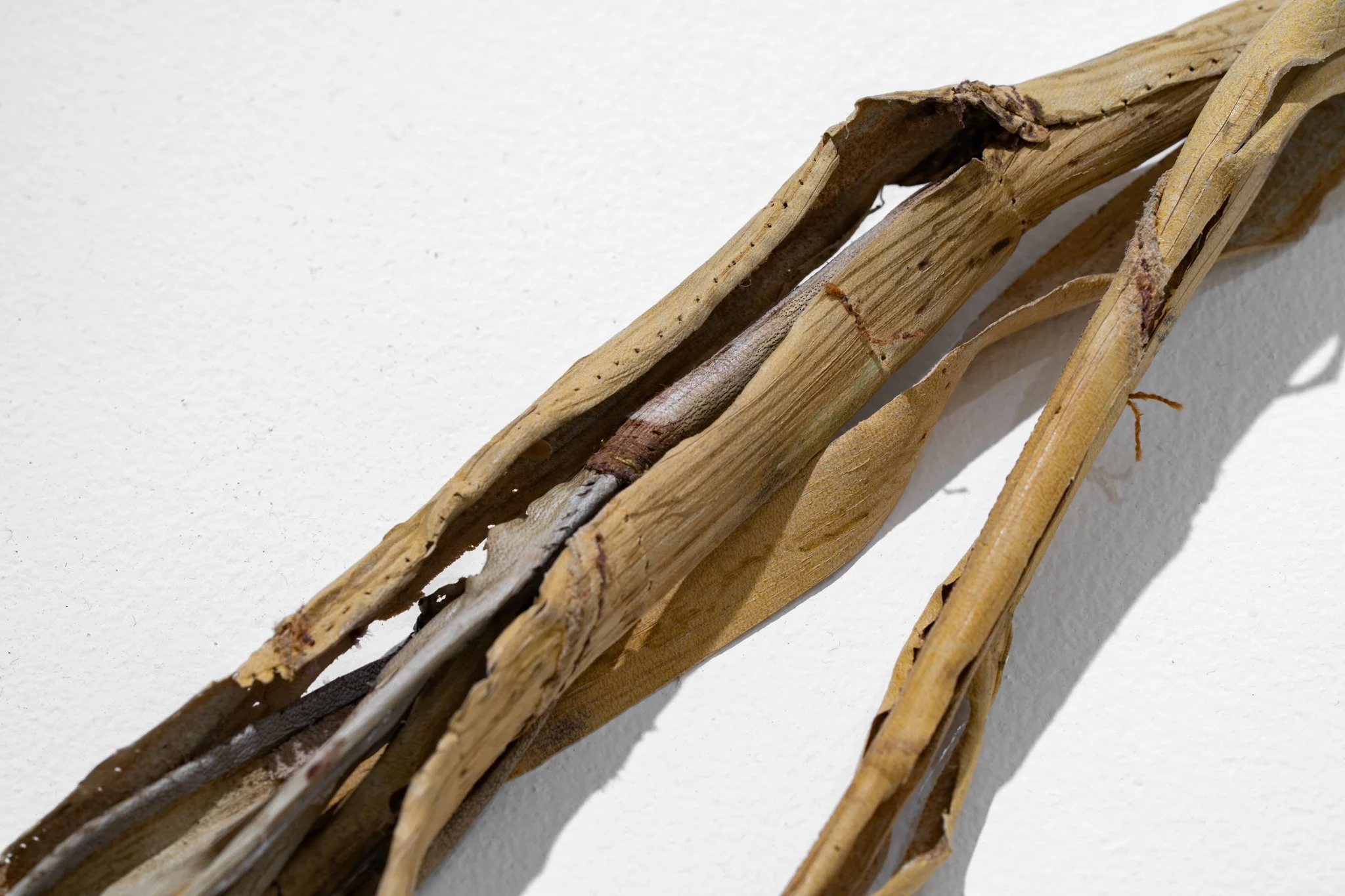
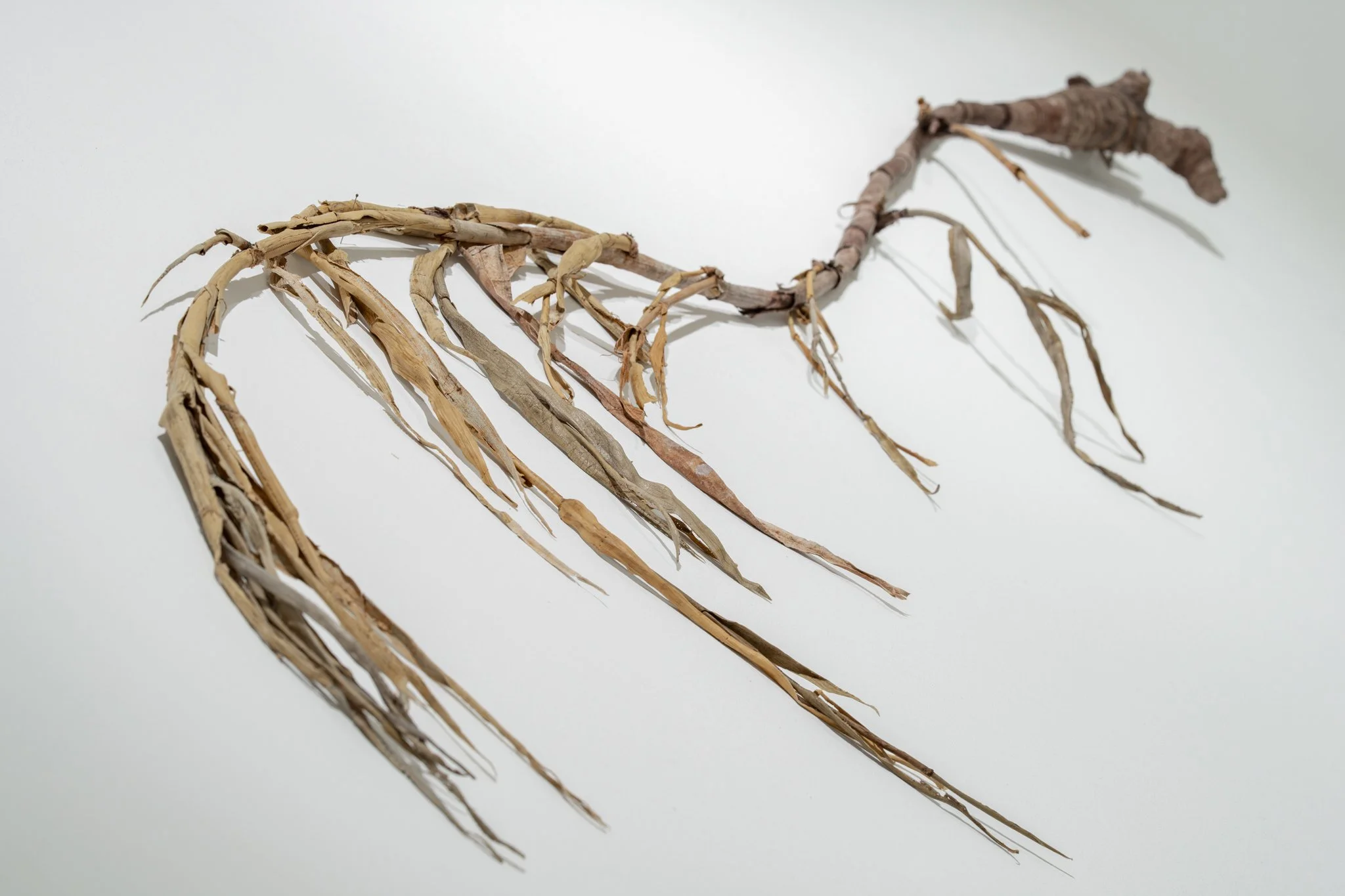
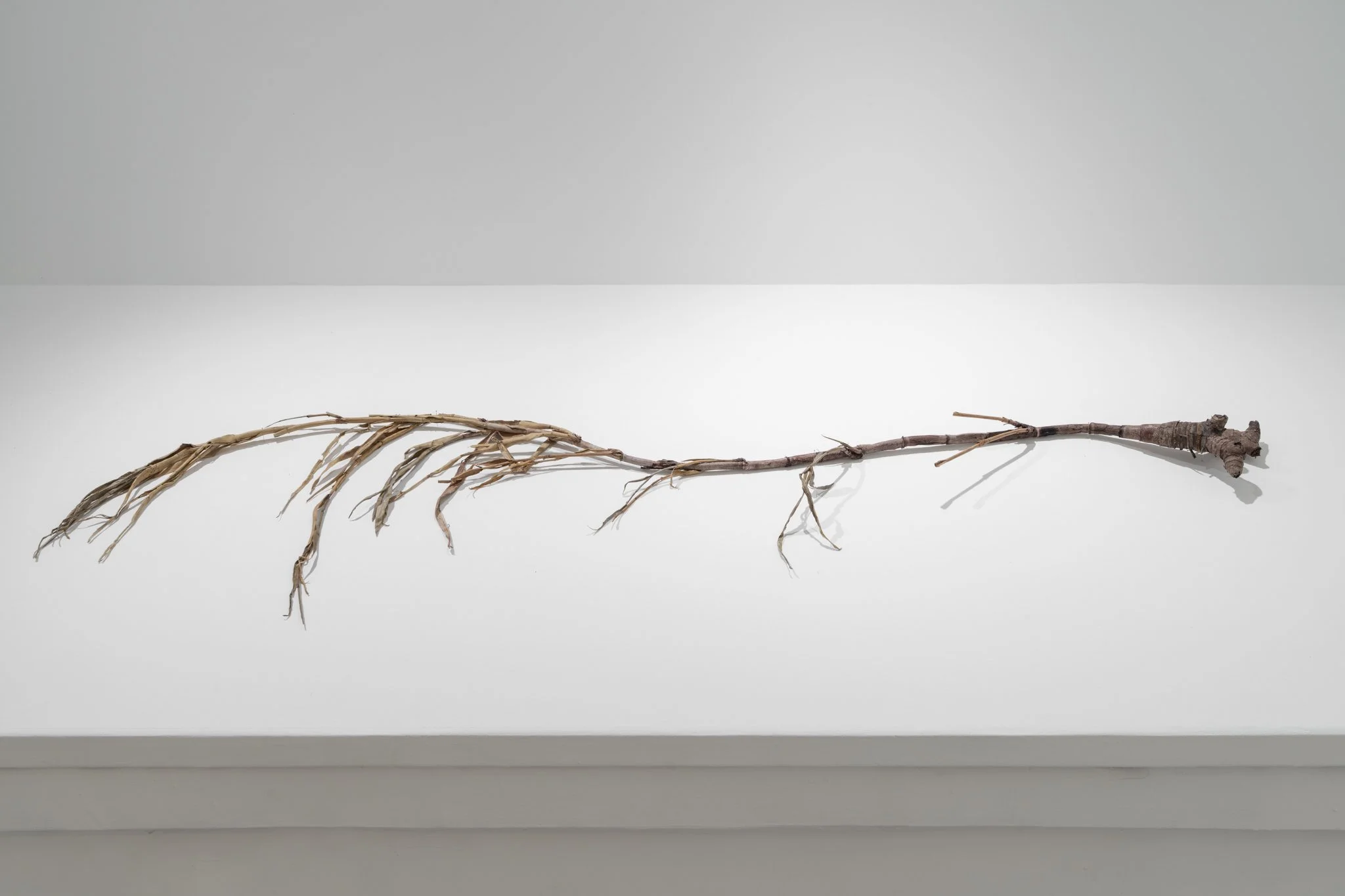
Arundo donax (detail), 2025, recycled leather, wax, 190x57x20 cm
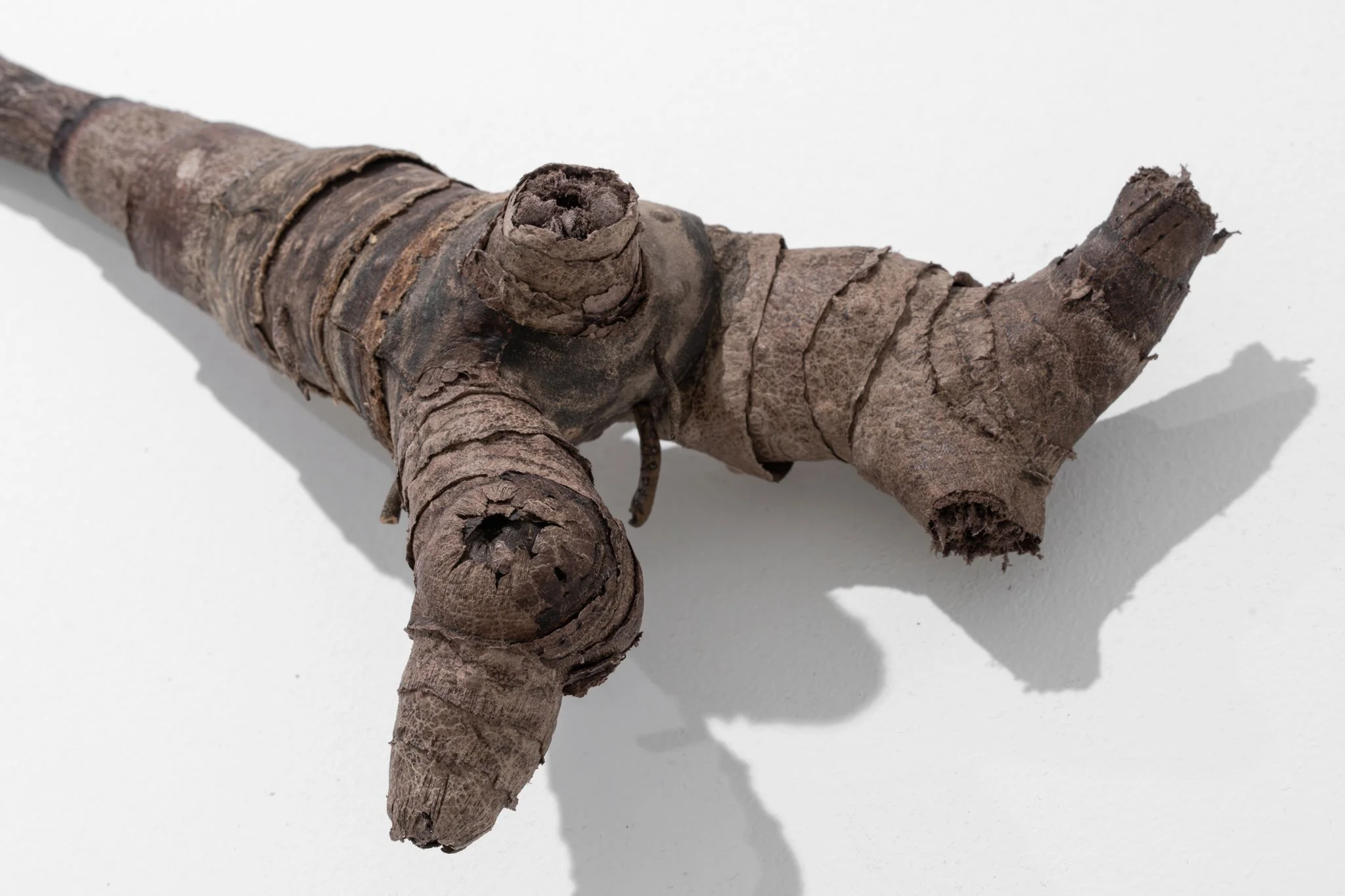
Arundo donax (detail), 2025, recycled leather, wax, 190x57x20 cm
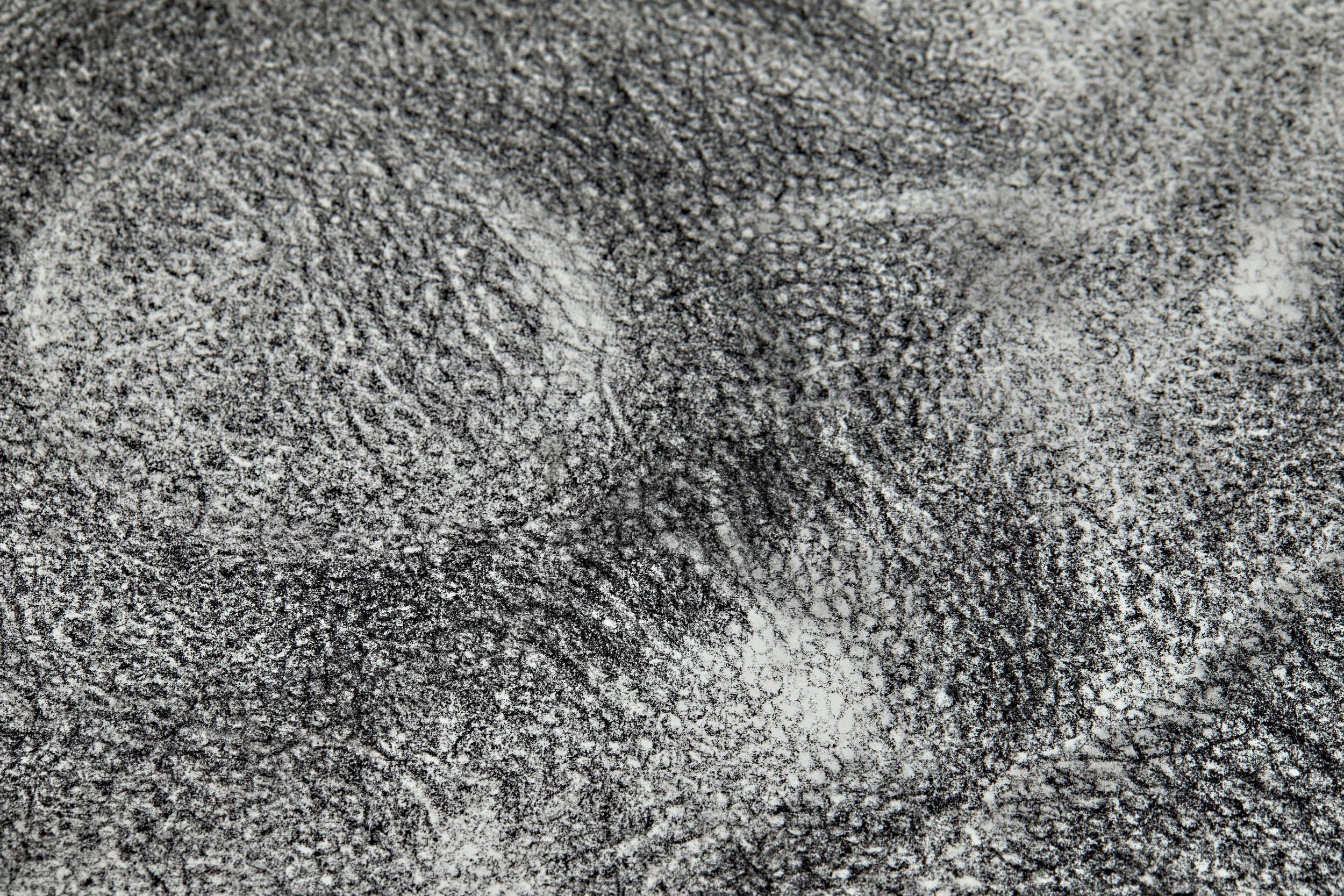
Porcelain Revival (detail), 2024, charcoal on paper, 100x70 cm (framed in oak tree: 74.9x105 cm)
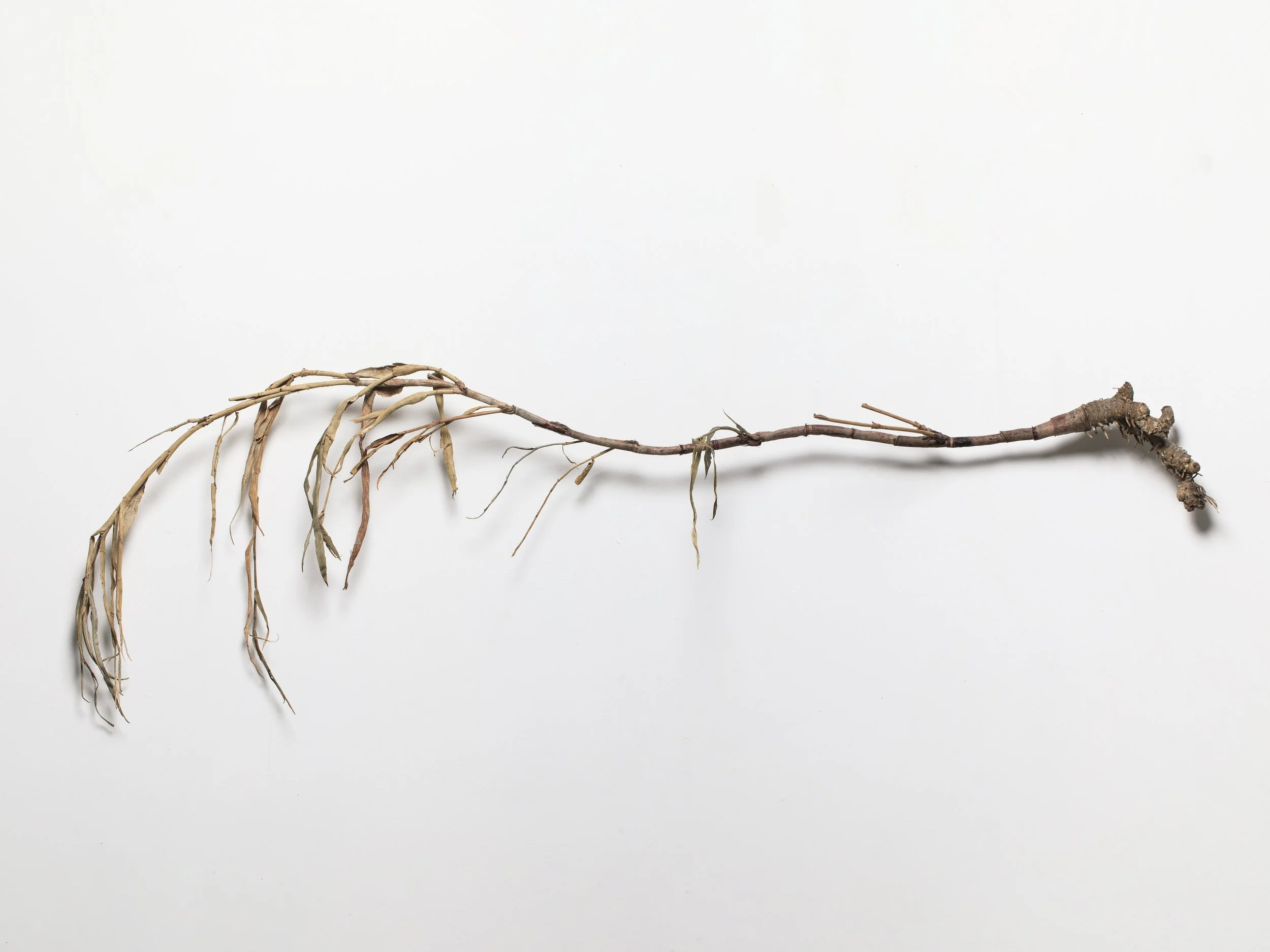
Arundo donax, 2025, recycled leather, wax, 190x57x20 cm
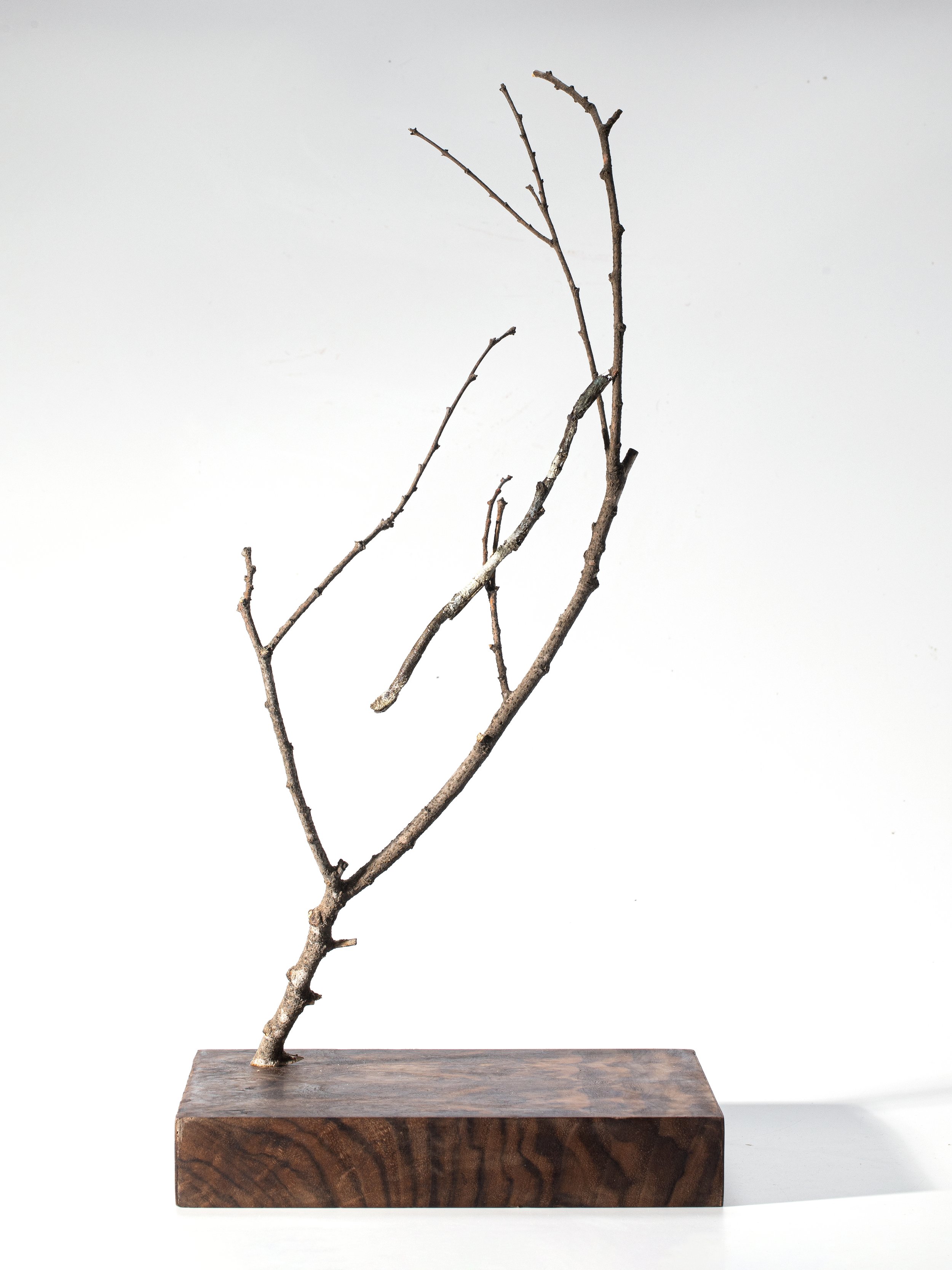
Hermagoras sigillatus, female in camouflage position, 2025, preserved female specimen of stick insect Hermagoras sigillatus, tree branch, MDF base covered with walnut burl veneer, 50.5x23.7x23.7 cm
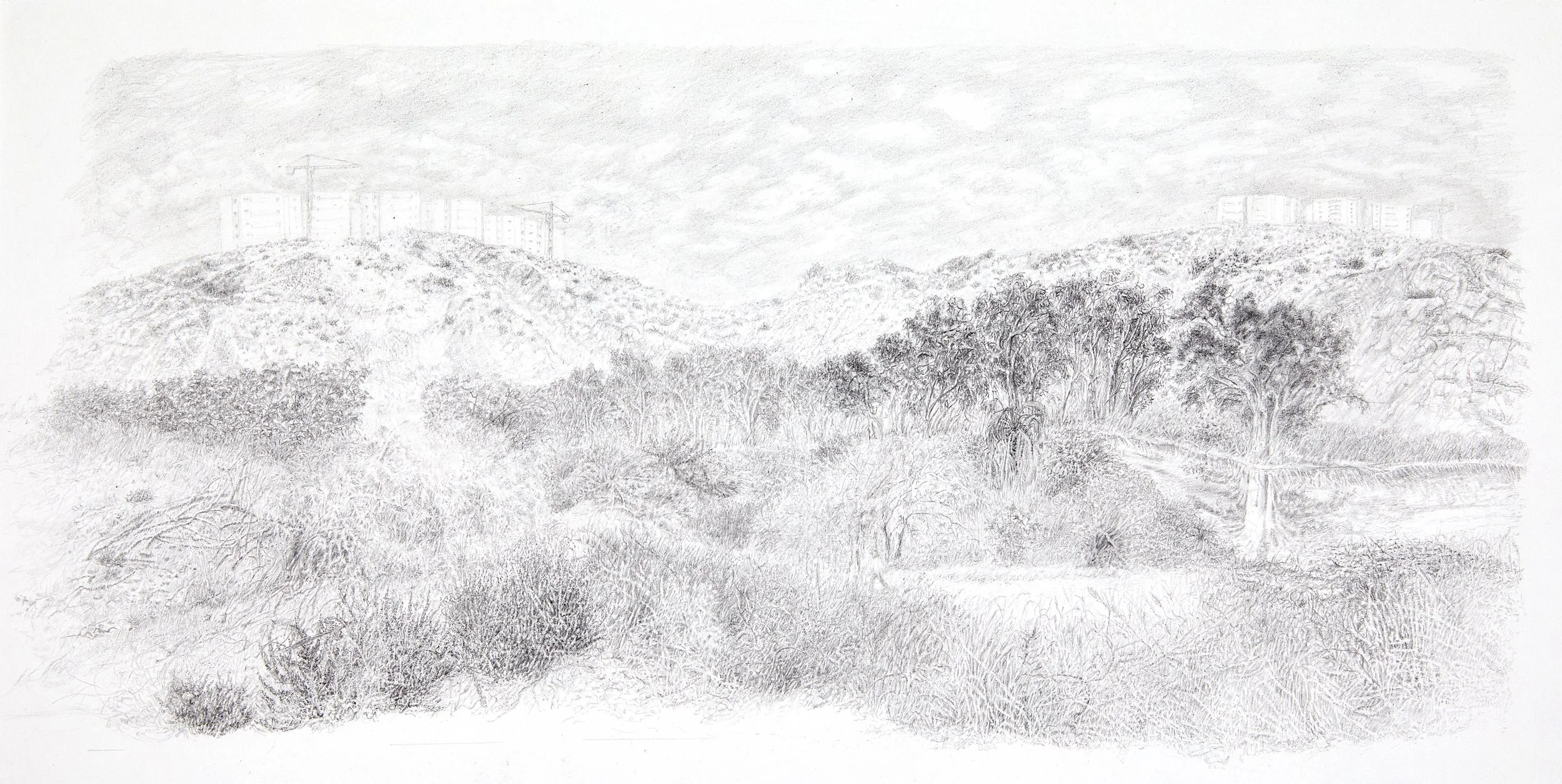
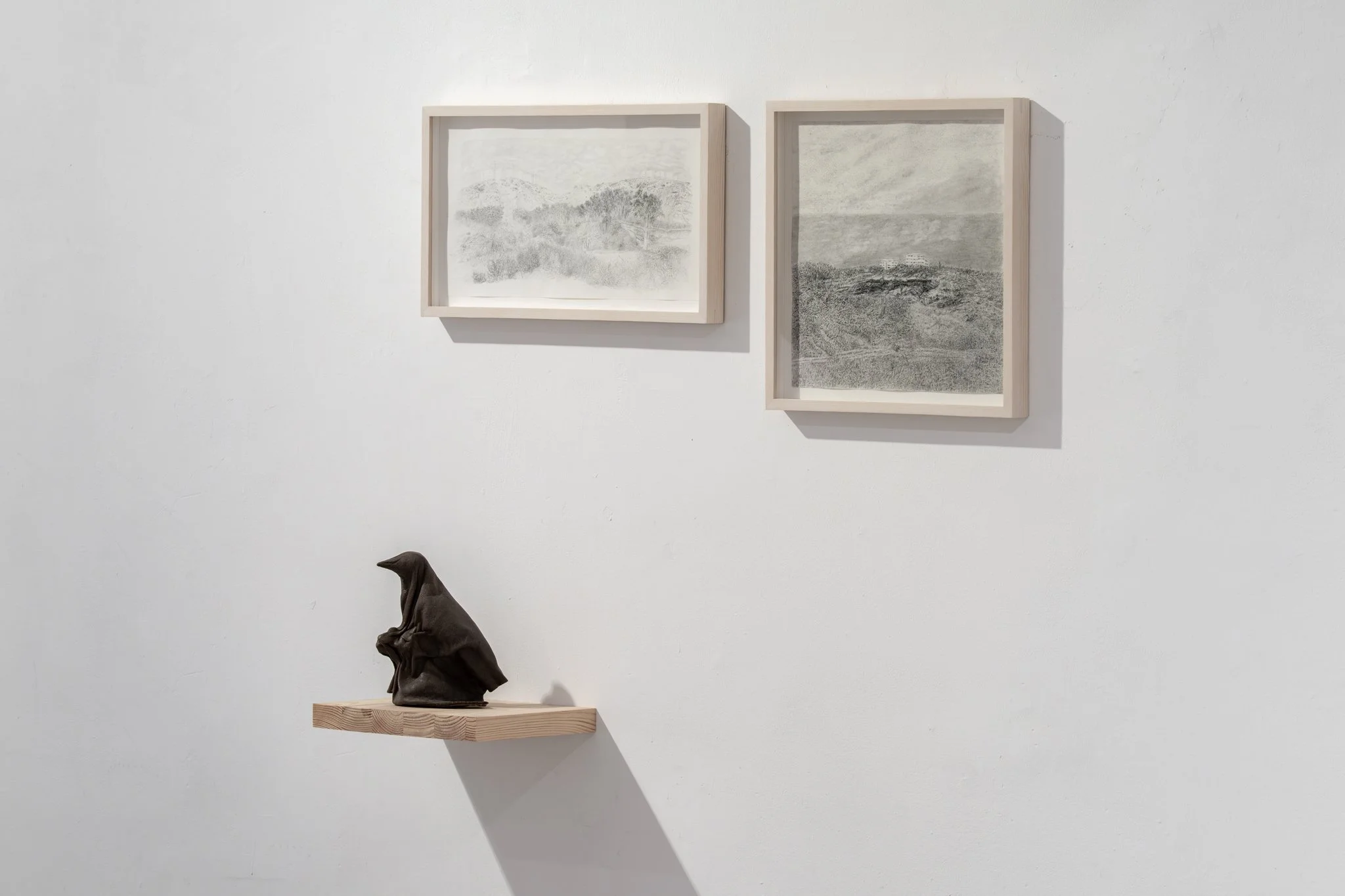
Residential Neighborhood 'Tochnit Lamed', Imagined Landscape from the Sea side, 2024, graphite on paper 38.4x19.3 cm (framed in bleached wood: 43.4x24.4 cm)
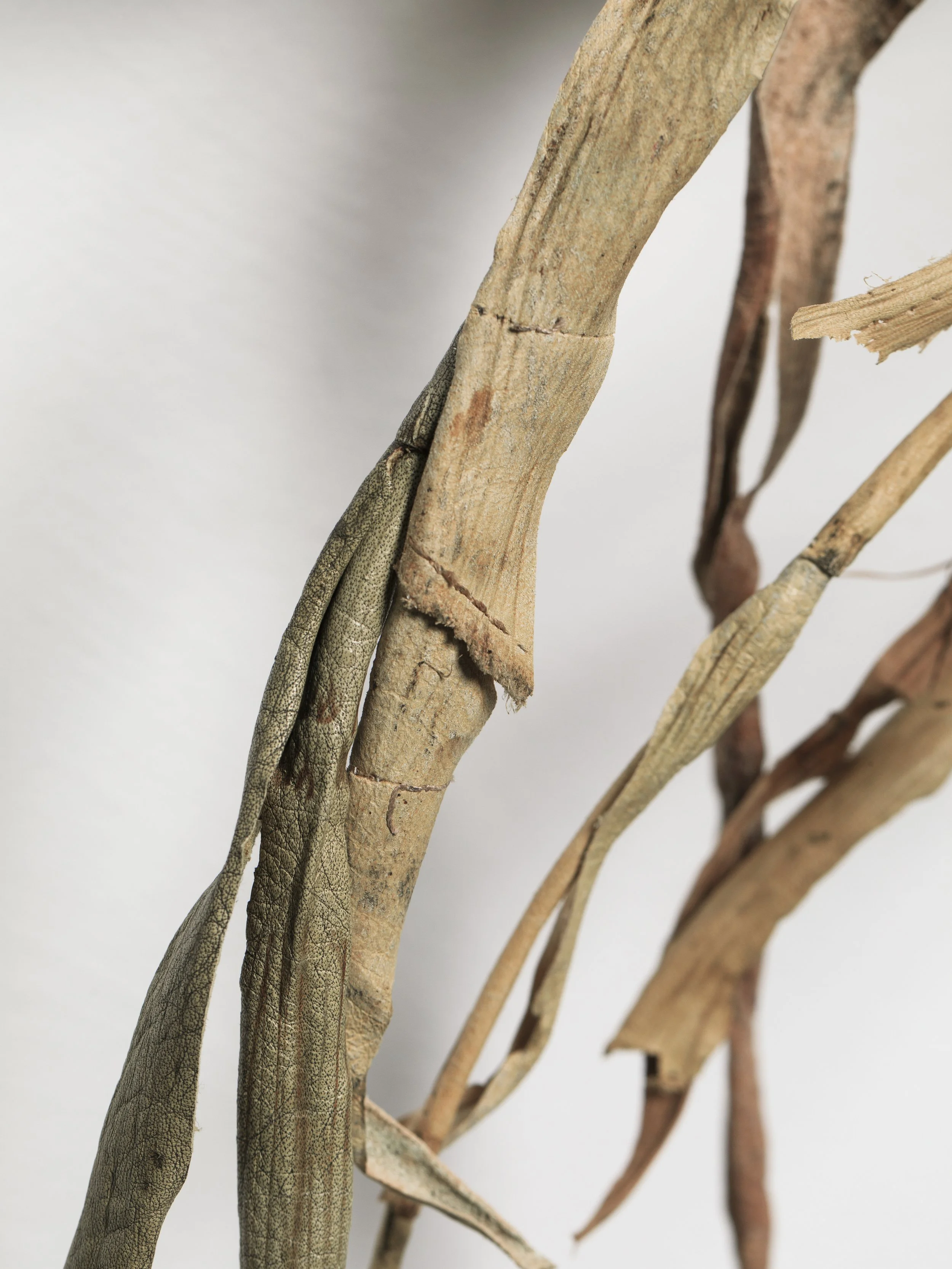
Arundo donax (detail), 2025, recycled leather, wax, 190x57x20 cm
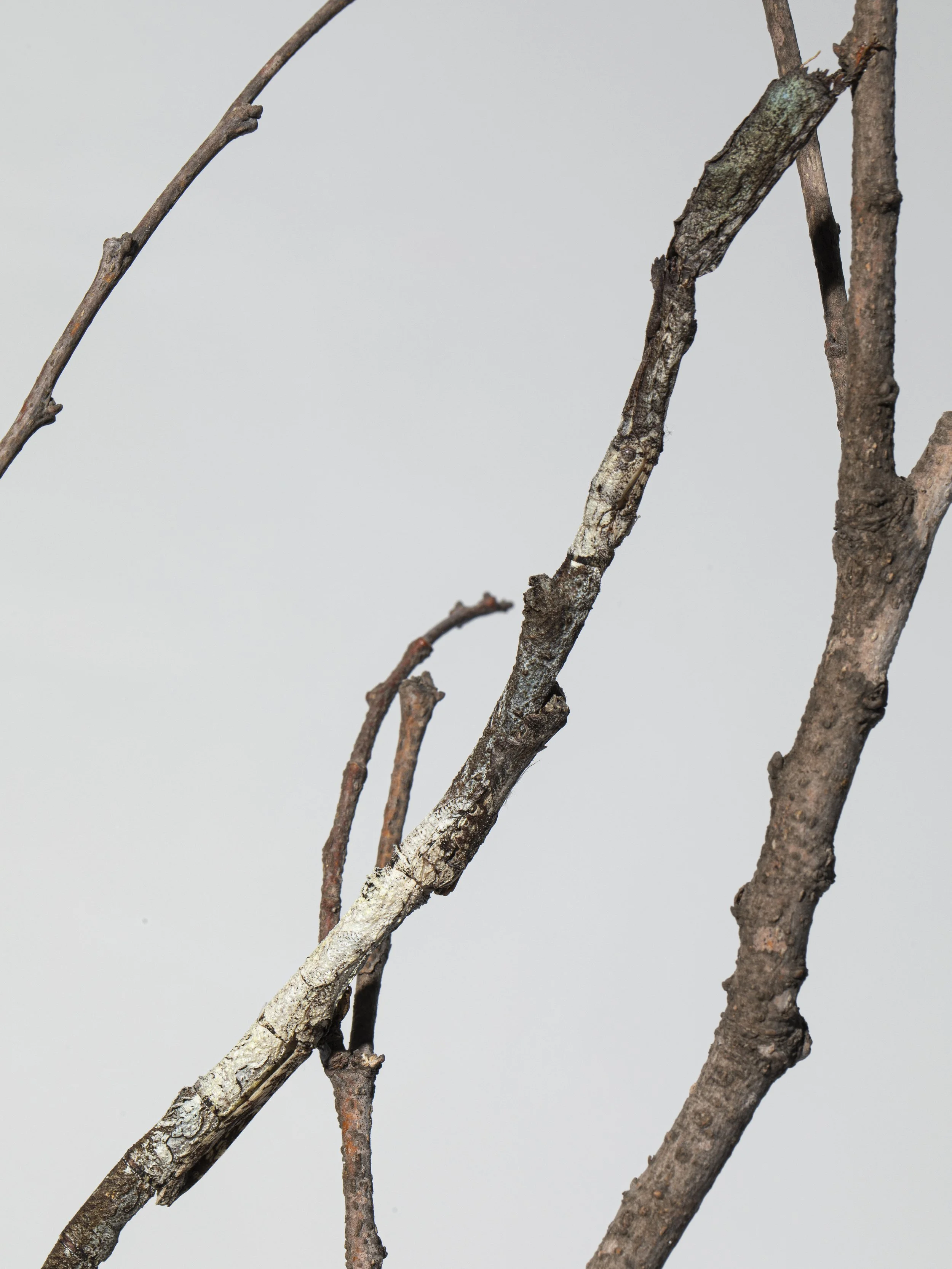
Hermagoras sigillatus, female in camouflage position (detail), 2025, preserved female specimen of stick insect Hermagoras sigillatus, tree branch, MDF base covered with walnut burl veneer, 50.5x23.7x23.7 cm
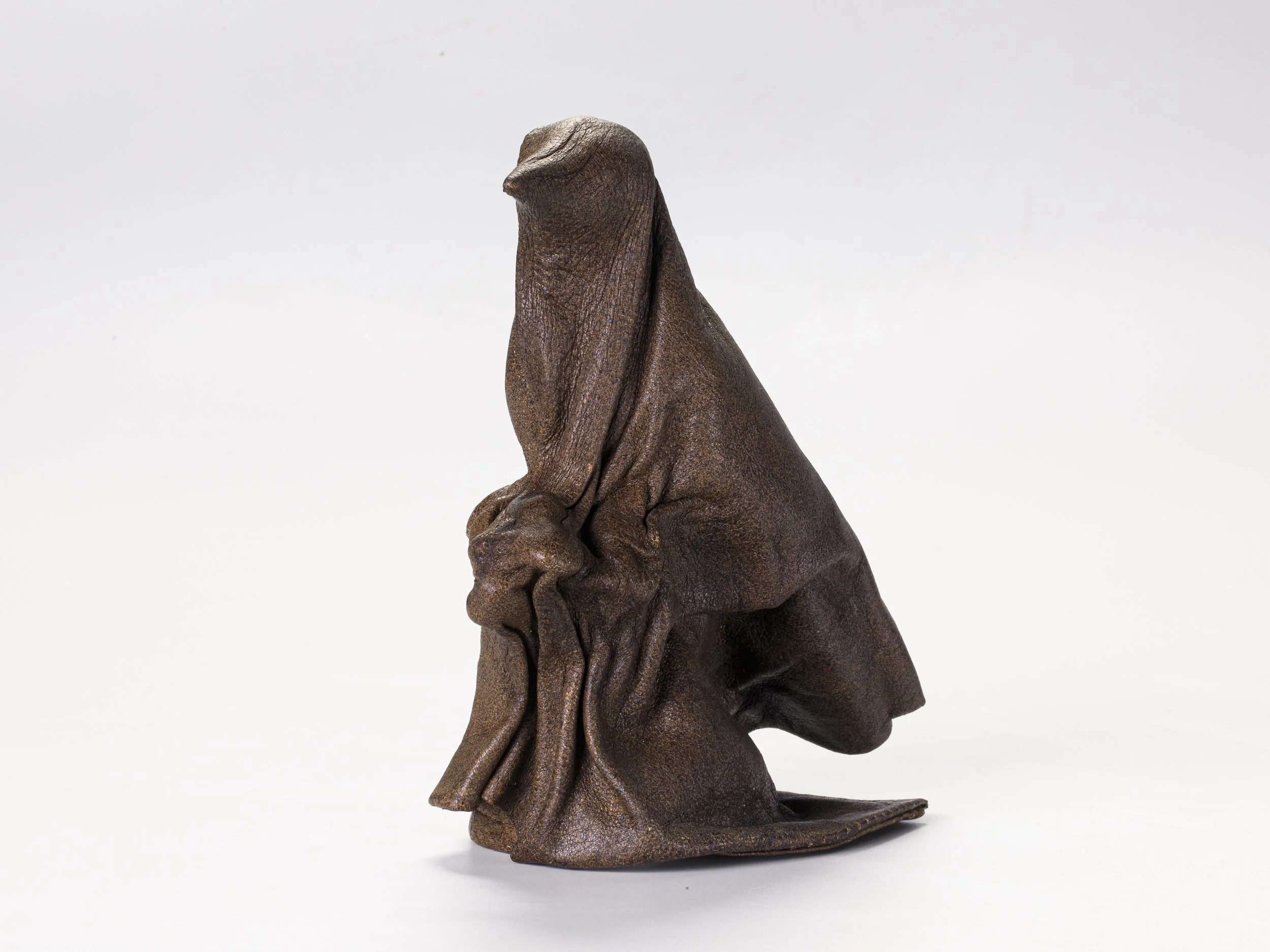
Dorotheum Bird, 2025, recycled leather, vintage Zsolnay Porcelain statue, 17.4x14.3x10 cm
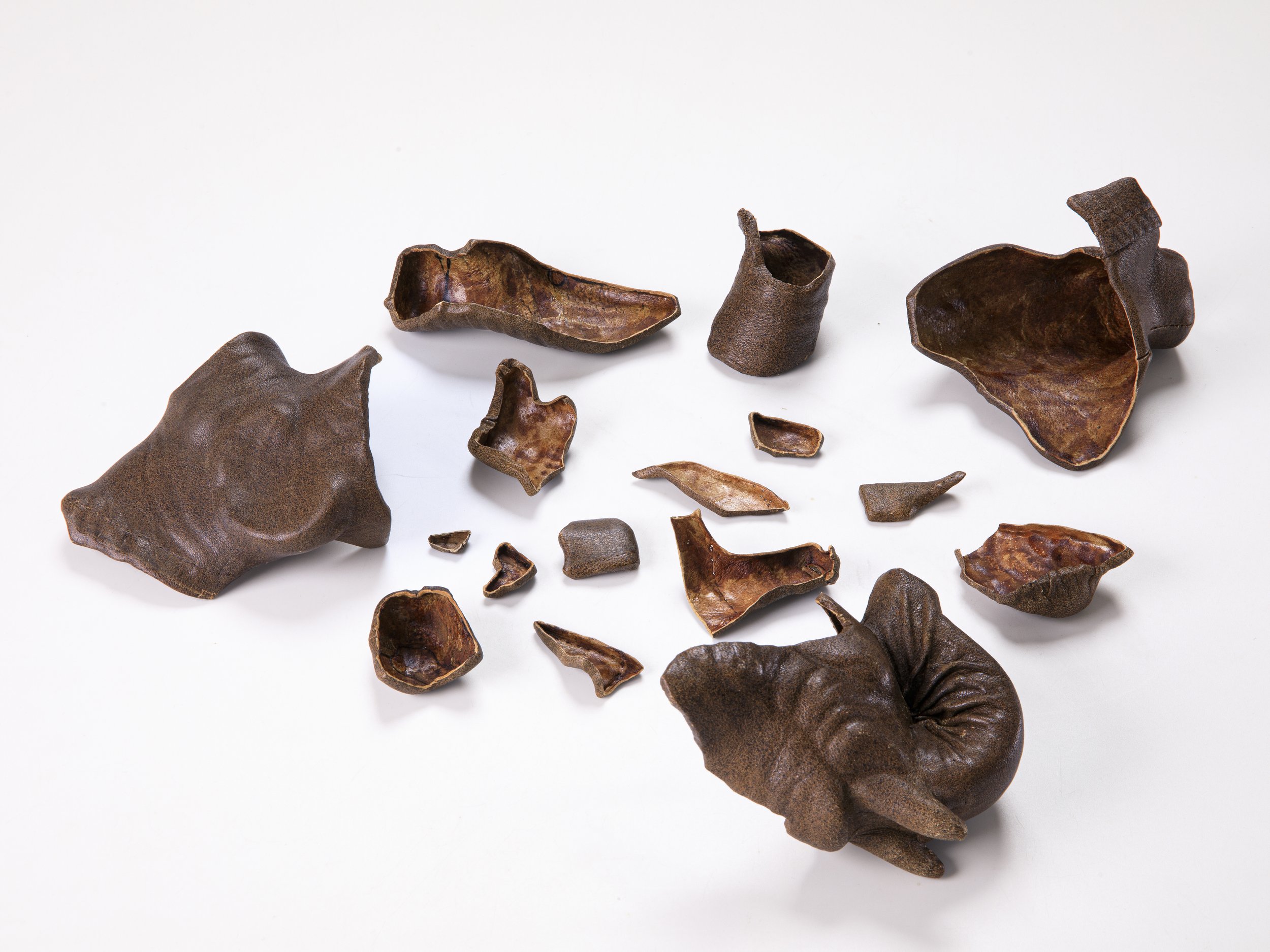
Letter to an Elephant (after Romain Gary), 2025, recycled leather, 20x16x4.5 cm
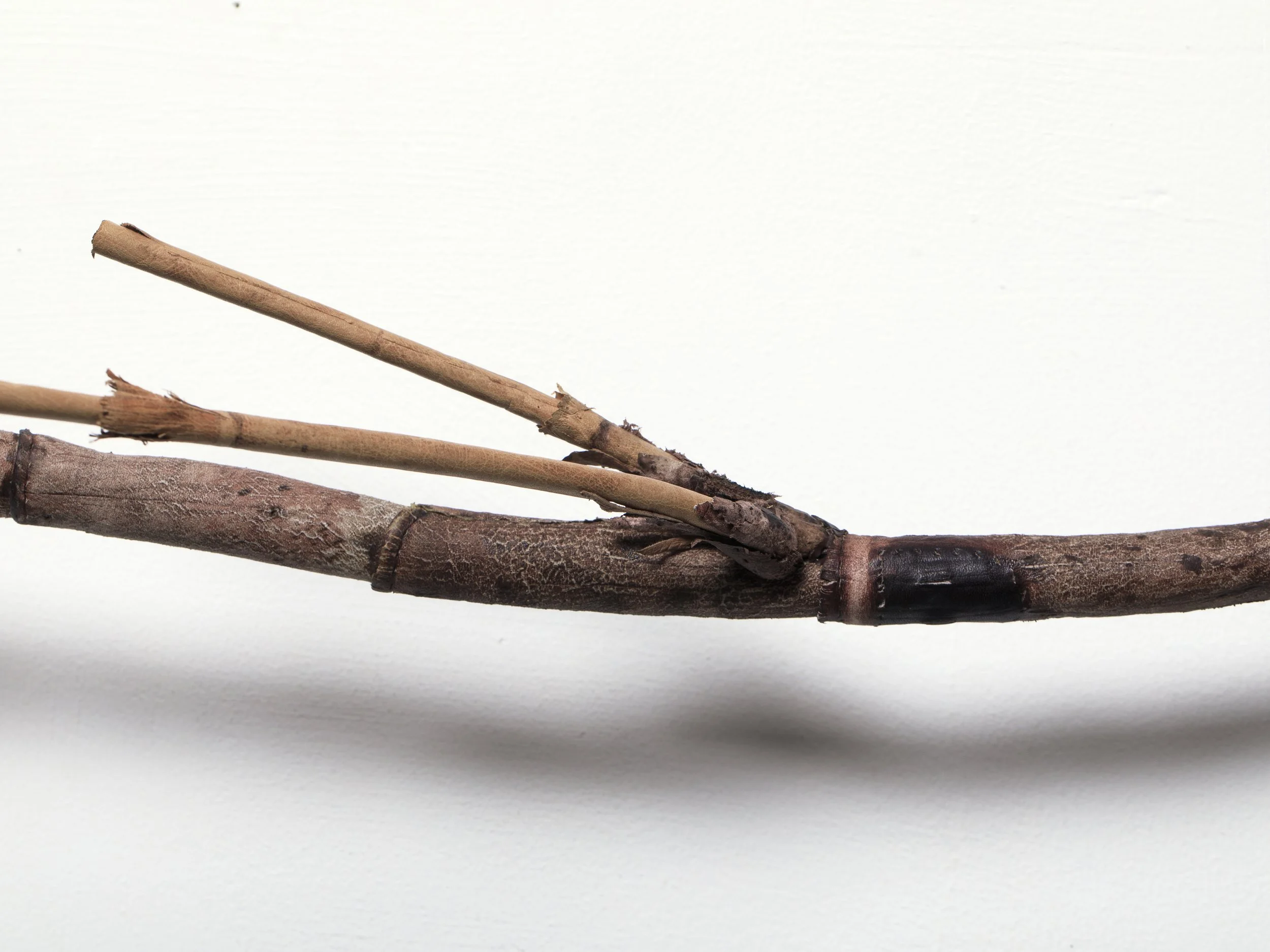
Arundo donax (detail), 2025, recycled leather, wax, 190x57x20 cm
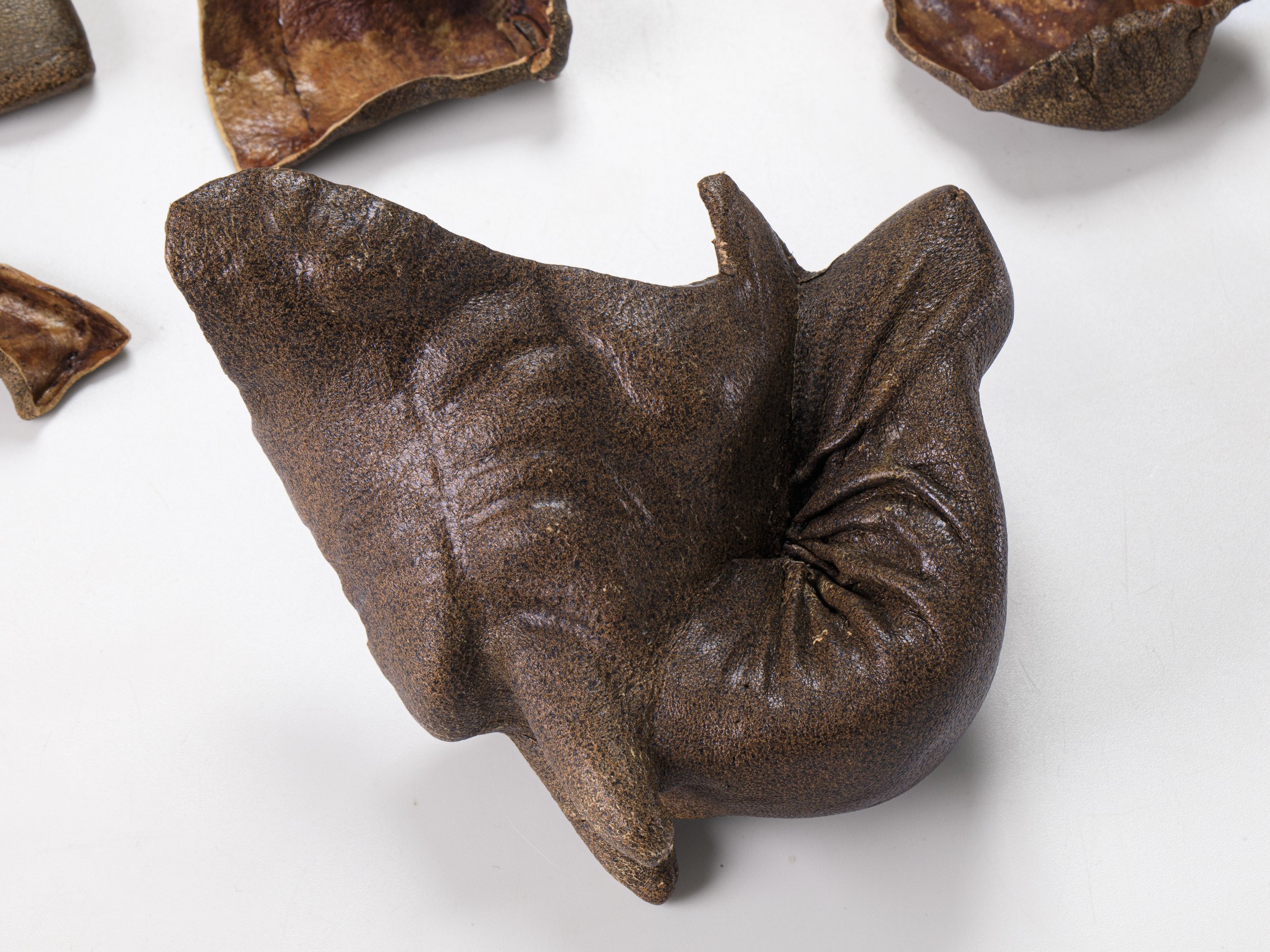
Letter to an Elephant (after Romain Gary) (detail), 2025, recycled leather, 20x16x4.5 cm
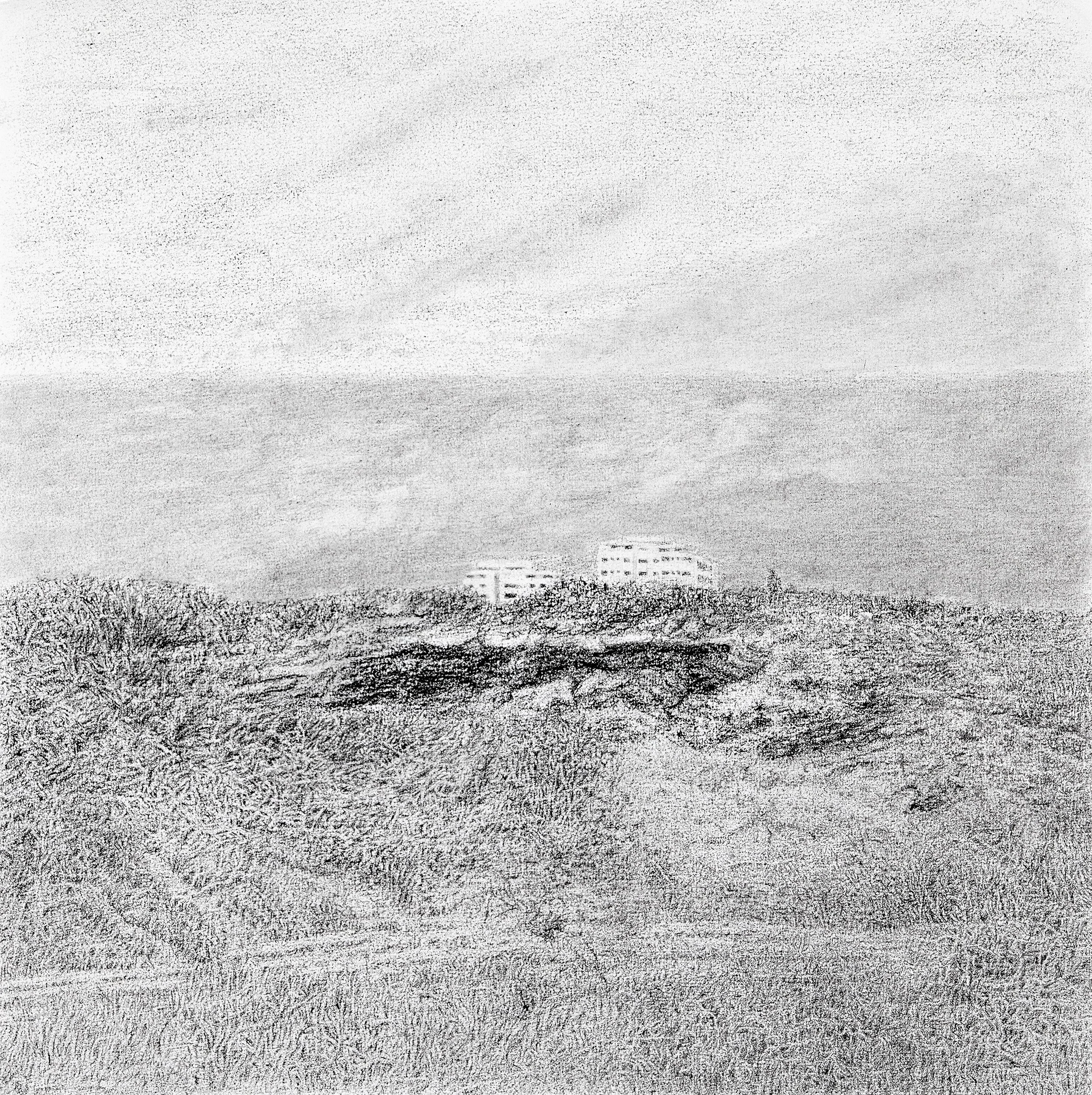
Residential Neighborhood 'Tochnit Lamed', A Figure of a Man on the Kurkar Ridge in front of Levy Eshkol Street, 2024, graphite and charcoal on paper, 29x29 cm (framed in bleached wood: 33.7x33.7 cm)
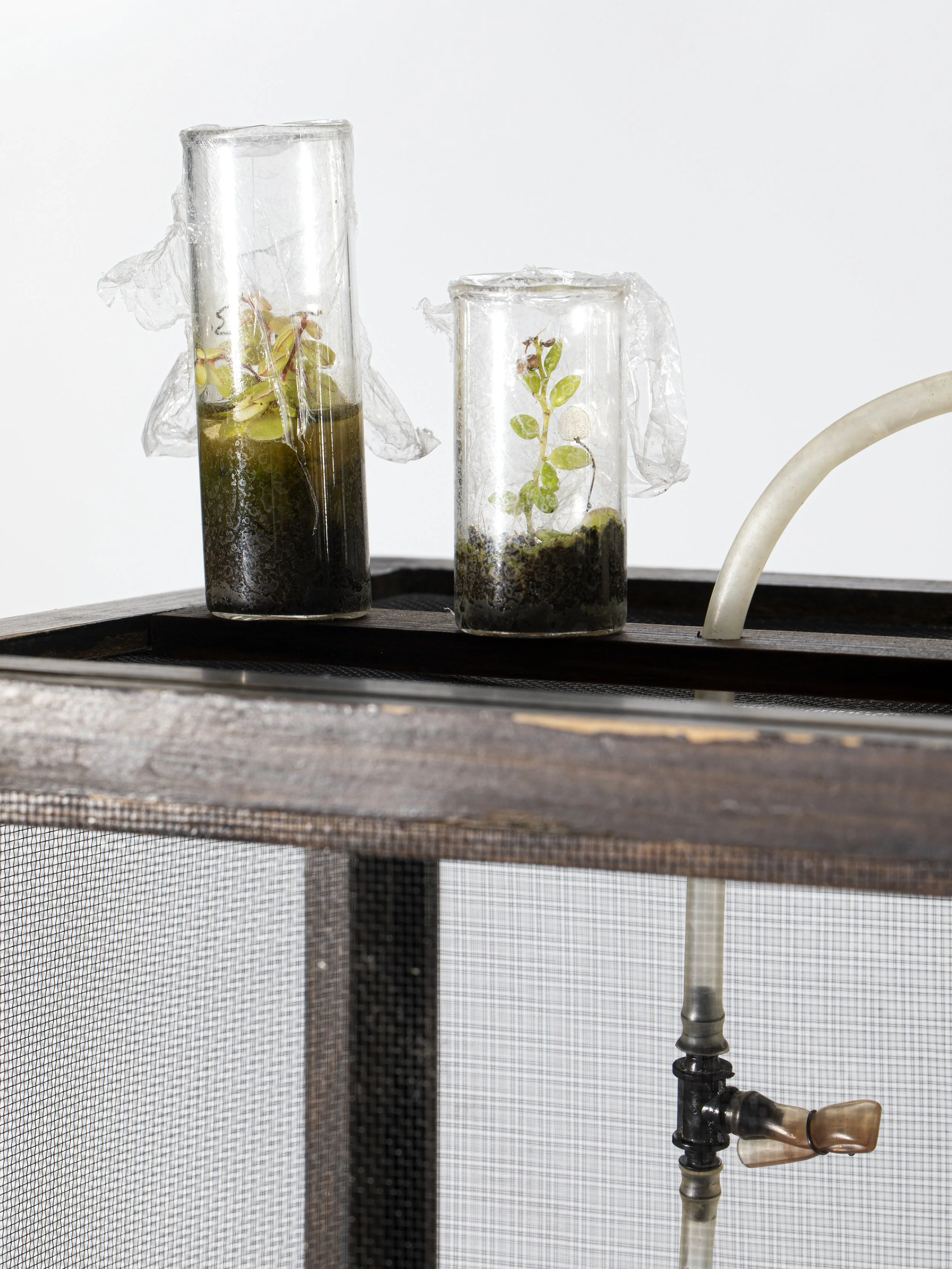
Terrarium (detail), 2025, wood, rubber tube, plastic connector, mesh, glass, test tubes with cuttings, dried Rubus ulmifolius. sanctus leaves, eggs of stick insect Phyllium letiranti 82x19x18.5 cm
Ronen Raz’s solo exhibition comprises a series of objects made from recycled and processed leather, graphite and charcoal drawings, watercolors, animal figurines, coals, rocks, clods of earth, soil samples, rock slivers, gravel and construction waste, a plant, and a charred tree stump. A careful examination will reveal that these are in fact leather fabrications. Next to them, Raz placed a terrarium – an abandoned insect habitat, jars with tiny plant cuttings, and a natural model of an insect from the Phasmatodea family (“stick insect”), mounted in a camouflage position on a branch affixed to a veneered base.
This is the Last Skin – different representations of survival; remains that were left behind like shed skin, residues, traces of memory in various casings: skins; representations – objects that themselves constitute visual skins; the visual skin of dreams, fantasies, reveries, and more.
Raz was born and raised in the 1970s in northern Tel Aviv’s Shikun Lamed. An in-between area on the city outskirts, an intermediate domain where the natural and the urban blend together. Over the years, the city grew and expanded into the areas of wild nature that gradually disappeared, until all that remained of it was the imaginary space that gave rise to new objects born from the edges. Material, geographical, physical, and mental margins.
The Exhibition Space
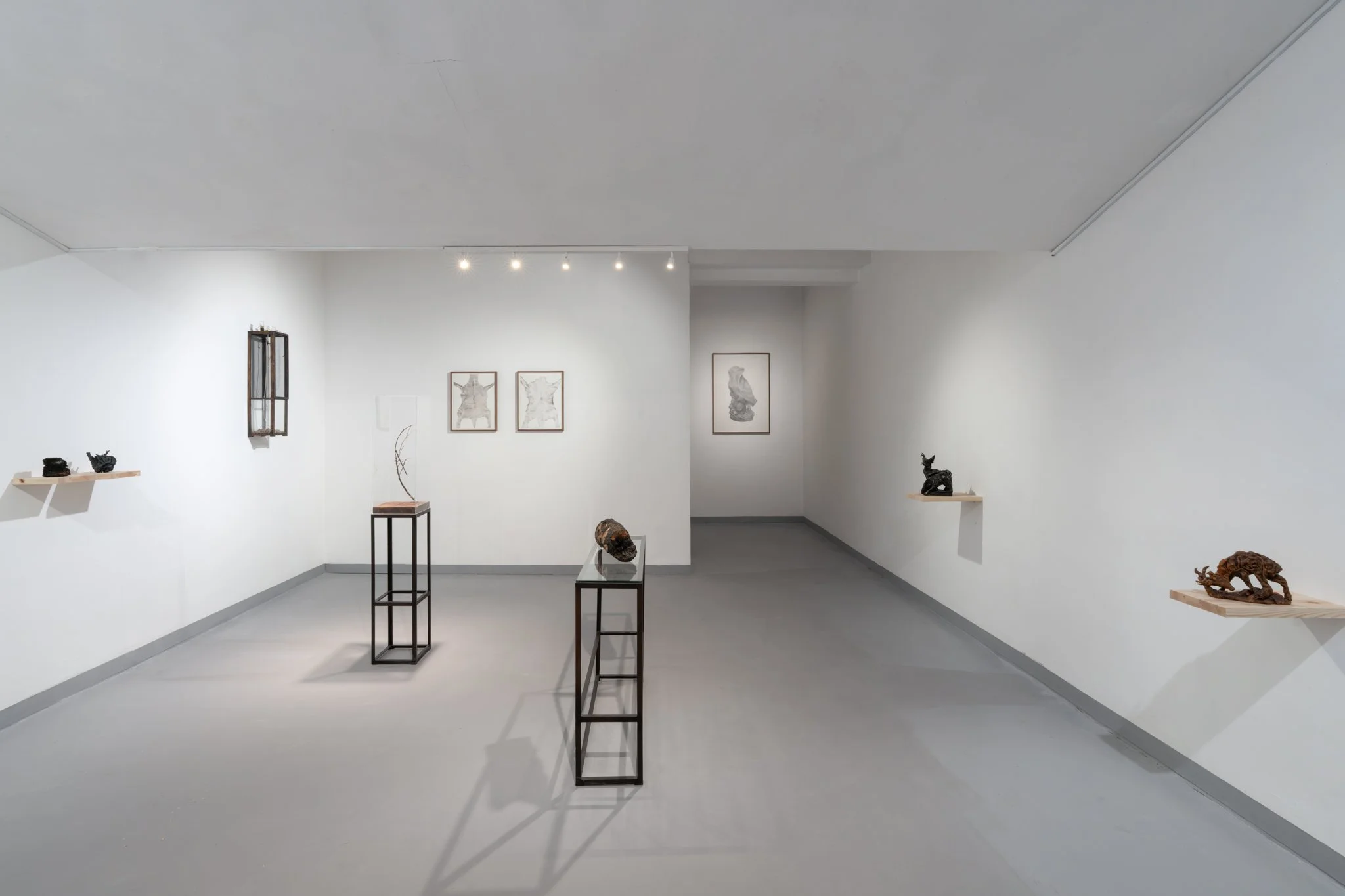
The space of the gallery serves as a potential capsule or habitat – a space where the products of the research lab that is the artist’s studio are stored; laboratories for the propagation of memories, visions, impressions, remains, proposals for a future life – all presented through the various uses of leather.
The Leather Works
The objects in the exhibition come from the artist’s leather collection, scraps taken from pre-worn clothes and footwear, or ones that were discarded as damaged stock. The leather salvaged from the garments was subjected to various chemical processes like soaking, skiving, and softening in order to recycle and rework it. The leather holds generations’ long history – and through industrial processes, becomes footwear or items of clothing. Raz processed these leather scraps by hand, preparing them to be used as raw material in his work – an action that preserves the memory of leather tanning, a practice that has been forgotten and lost to industrialization and mechanization processes.
A closer look will reveal additional layers in the leather works: structures of compacted, reinforced, or covered layers of leather. At first, the viewers observe the unassuming, quotidian object; contemplate the similarities and differences, relish the vagueness surrounding the objects’ origin. As they continue to look closer, intimate details and subtleties begin to emerge, generating a sense of estrangement and dread, once the objects’ leather nature is revealed. “I process the leather so that it is difficult to tell the original from the imitation (the replica),” says Raz, “so that the copy becomes more faithful to the original.”
Other objects include vintage animal figurines made of fine Eastern European porcelain, delicate objets d’art, perhaps the memory of distant living rooms – which the artist covers with reclaimed leather, inducing a formative transformation. After this process of covering and shape-changing, they still hold a subtle memory of the original animal shape, but are in fact new, reborn out of the use of the leather casing.
The Drawings and Paintings
The drawings and paintings in the exhibition were created through lengthy observation followed by delicate and precise drawing of realistic yet fictional landscapes: the edges of the city and nature, urban buffer zones, brownfields, and at times, distant buildings. In these, there is a clear attempt to reconstruct a fragmented and half-fabricated memory. Alongside these landscapes and spaces, Raz also paints landscapes of fur in watercolors; flayed fur, which becomes fantastic and terrifying fictional landscapes.
The Abandoned Terrarium
A habitat for insects. On top of it, the artist placed jars containing tiny plant cuttings. The bottom of the terrarium is covered with leftover leaves and eggs of stick insects that were once kept there. Another object is a natural model, which includes a (female) specimen mounted in a camouflage position on a plant, affixed to a veneered base. The structure of the terrarium and the natural model is reminiscent of an entomological laboratory, which is still trying to preserve something of the rapidly vanishing nature. The only living natural objects here are the cuttings – tiny plants, a section of a mature plant that has been cut and separated from another plant in order to grow new roots, so it can develop and propagate.
Concluding Remarks
The skin is a tissue that covers the entire body; a liminal space between the outside and the inside, between the animalistic and the cultural. The most intimate signs and traumas live their marks on the surface of this tissue. At the same time, animal skin, reframed as “leather,” is an industrial material subjected to the laws of fashion and economics.
For me, the different ways in which Raz uses leather in his works are evocative of skin that envelops the skeleton, flesh, and muscles. The scraps of leather are a visual skin, and at the same time, they are skins of senses, dreams, and imaginings. Raz transforms the processed leather into a surface for dreaming, transforming its shape and creating something entirely new. The leather in the works serves as a covering for the porcelain sculptures, either as an object in itself or as a copy almost indistinguishable from the original – to the point that the viewer mistakenly identifies it as natural skin (an optical illusion or a predictor decoy, which has an element of gruesomeness about it). In these works, the difference between the leather and the object itself disappears, bringing to mind the insects’ camouflage tactic – and then the skin becomes a shell for an empty space and a residue of sorts. This is a complete erasure of the difference – leaving the leather “skin” as an empty husk that embodies death, while the covering (of something or someone) in a leather “skin” preserves the difference and embodies life.
Last Skin is a manifestation of concentrated pain; pain that grows a skin, as a covering that enables and protects life; at the same time – the shedding of skin and unsheathing of the naked body exposes the body to death. These are processes of living, losing, coping, and dying, repeated ad nauseum. The historical traditions and practices of processing recycled leather are present in the works as a future memory; alongside processes of changing and taking on form, covering and shedding, coating and emulation, protecting and capturing, enveloping and disappearing. The last skin, transformed by repeated tanning and softening, finds itself in its new form as a work of art, presenting its incarnations between life and death – and between the first skin and the last skin.
Ori Drumer
Art Curator and Cultural Scholar
(September 2025)
Press
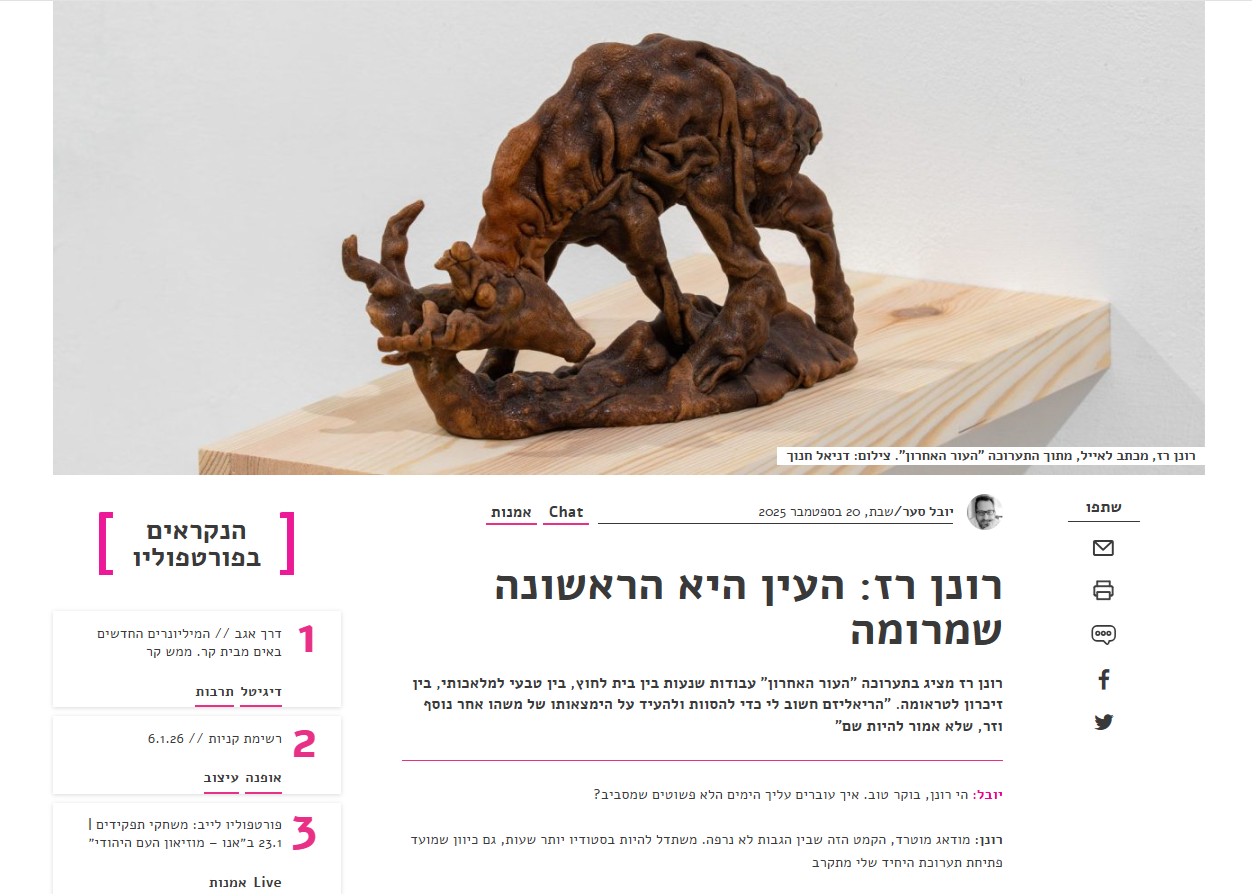
Interview for Portfolio Magazine (Hebrew)
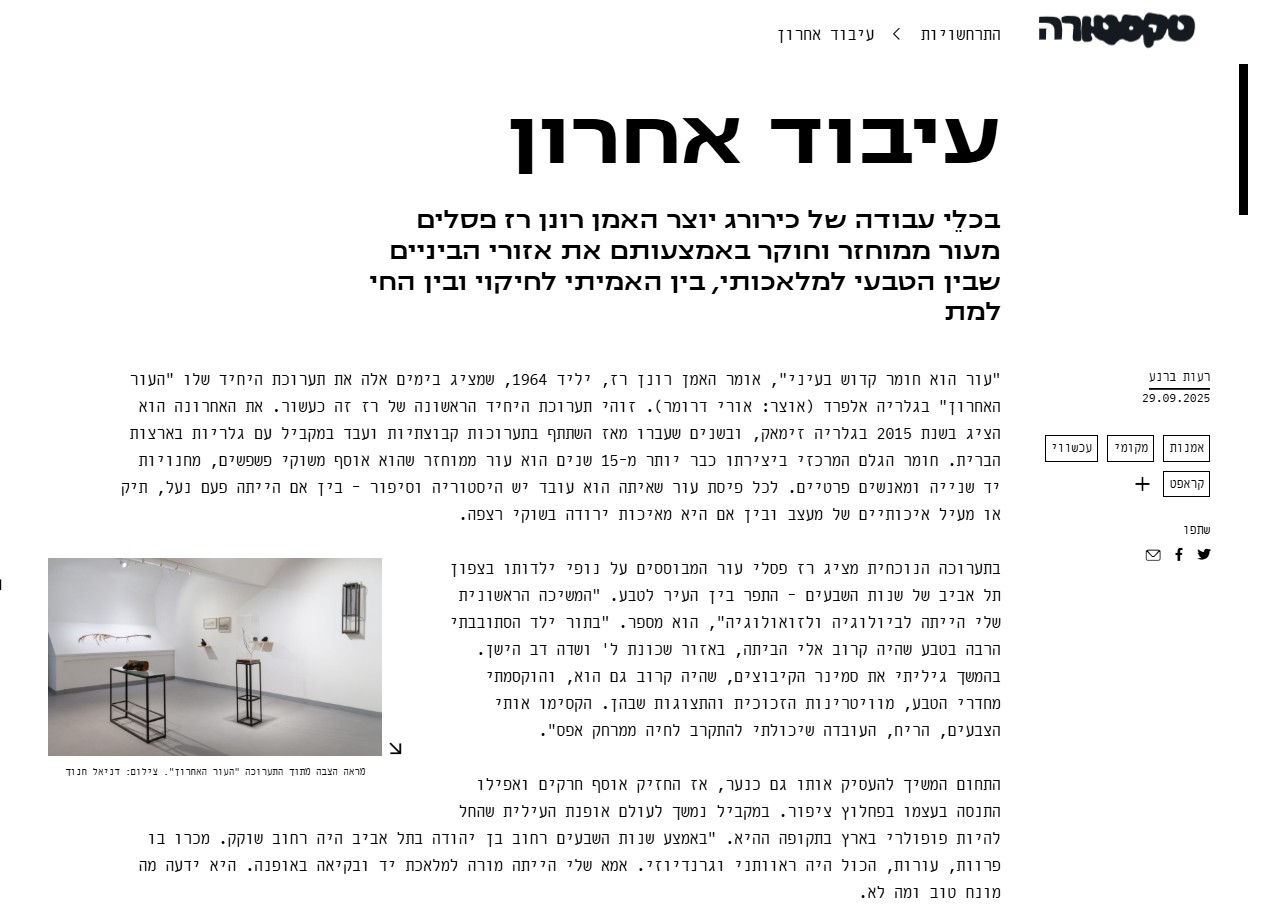
Interview for Textura Magazine (Hebrew)